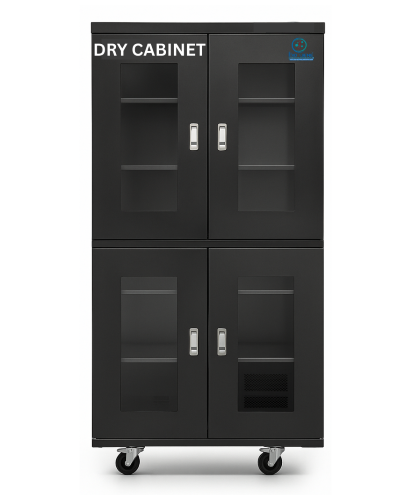
BioGene is a trusted 2 Door Dry Cabinet Manufacturer, Supplier & Exporter in India and worldwide. Our 98 L Dry Storage Cabinet and 220 L Dry Storage Cabinet are engineered to protect moisture-sensitive materials such as electronic components, optical instruments, pharmaceuticals, reagents, calibration devices, and laboratory samples from humidity damage, fungus growth, and oxidation.
As a leading 2 Door Dry Cabinet Manufacturer, Supplier & Exporter in India and globally, BioGene delivers reliable, high-performance dry storage solutions backed by strong after-sales support, custom capacities, and export-quality standards trusted by laboratories and industries worldwide.
The BioGene 2 Door Dry Cabinet is widely used in electronics manufacturing units, semiconductor industries, research laboratories, pharmaceutical companies, hospitals, optical and camera industries, and calibration & metrology labs. It is ideal for storing PCB boards, SMD components, camera lenses, medical devices, reagents, and precision instruments that require a low-humidity, contamination-free environment.
The cabinet is equipped with a microprocessor-based digital humidity controller that allows precise setting and continuous monitoring of internal humidity levels. Alarm indicators alert users in case of abnormal humidity fluctuations, ensuring consistent protection of stored materials.
Constructed with high-quality powder-coated mild steel or stainless-steel body, the cabinet features airtight double doors with silicone gaskets to prevent moisture ingress. The robust build ensures long service life, chemical resistance, and stable performance even in high-humidity environments.
| Specification | 98 L Dry Storage Cabinet | 220 L Dry Storage Cabinet |
|---|---|---|
| Capacity | 98 Liters | 220 Liters |
| Number of Doors | 2 Doors | 2 Doors |
| Humidity Range | <20% RH (adjustable) | <20% RH (adjustable) |
| Control | Digital Microprocessor Controller | Digital Microprocessor Controller |
| Body Material | Powder Coated / Stainless Steel | Powder Coated / Stainless Steel |
| Shelves | Adjustable | Adjustable |
| Power Supply | 220V / 50Hz | 220V / 50Hz |
| Application | Electronics, Pharma, Labs | Electronics, Pharma, Labs |


 Related Products