Lab Chillers for Precise & Efficient Laboratory Equipment Cooling
BioGene Lab Chillers are compact, high-efficiency cooling systems designed to maintain stable, low-temperature conditions for laboratory instruments and experiments. Manufactured and exported by Biotechnologies Inc., these chillers are ideal for analytical devices, lasers, fermenters, rotary evaporators, and other heat-sensitive applications. Equipped with precise digital temperature control, quiet operation, and robust refrigeration technology, BioGene lab chillers ensure reliable performance in R&D labs, pharmaceutical units, industrial testing, and educational institutions. Built in India and trusted worldwide, they provide consistent cooling with low power consumption and easy integration.
Simple and economical means of freeze drying for stabilization of living material and preservation of fragile substances. Equipped with vacuum freeze drying technology and customizable tray spacing, this is the right product for your small scale freeze drying requirements.
Applications
Bio Gene®LAB CHILLERare widely used in
Electronic Industry for Delicate Parts
Hospitals and Medical Facilities
Dental Office & Laboratories
Industrial Manufacturing
Engineering Industries
Research Centers
Universities
Gravimetric analysis
Sintering
Quantitative analysis
Feature
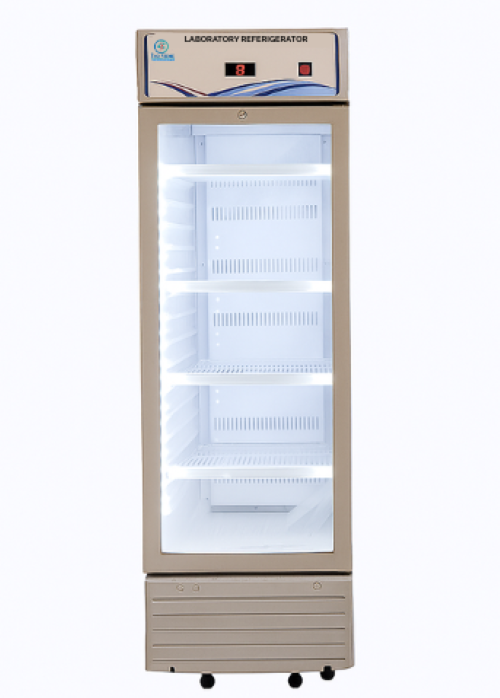
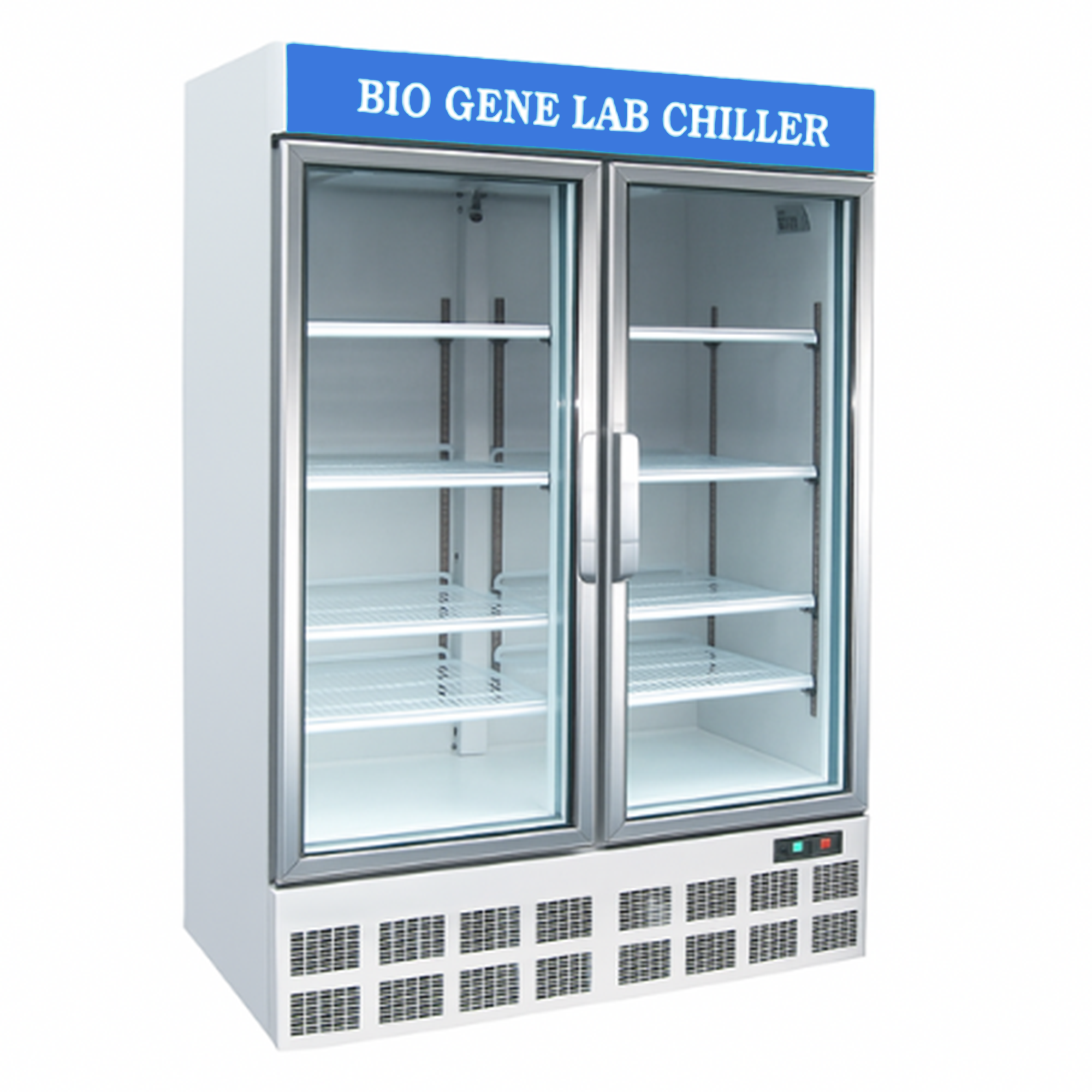
Flexible shelving for easy storage.
Automatic door closing.
Stainless steel inside / outside.
High temperature / door Alarm
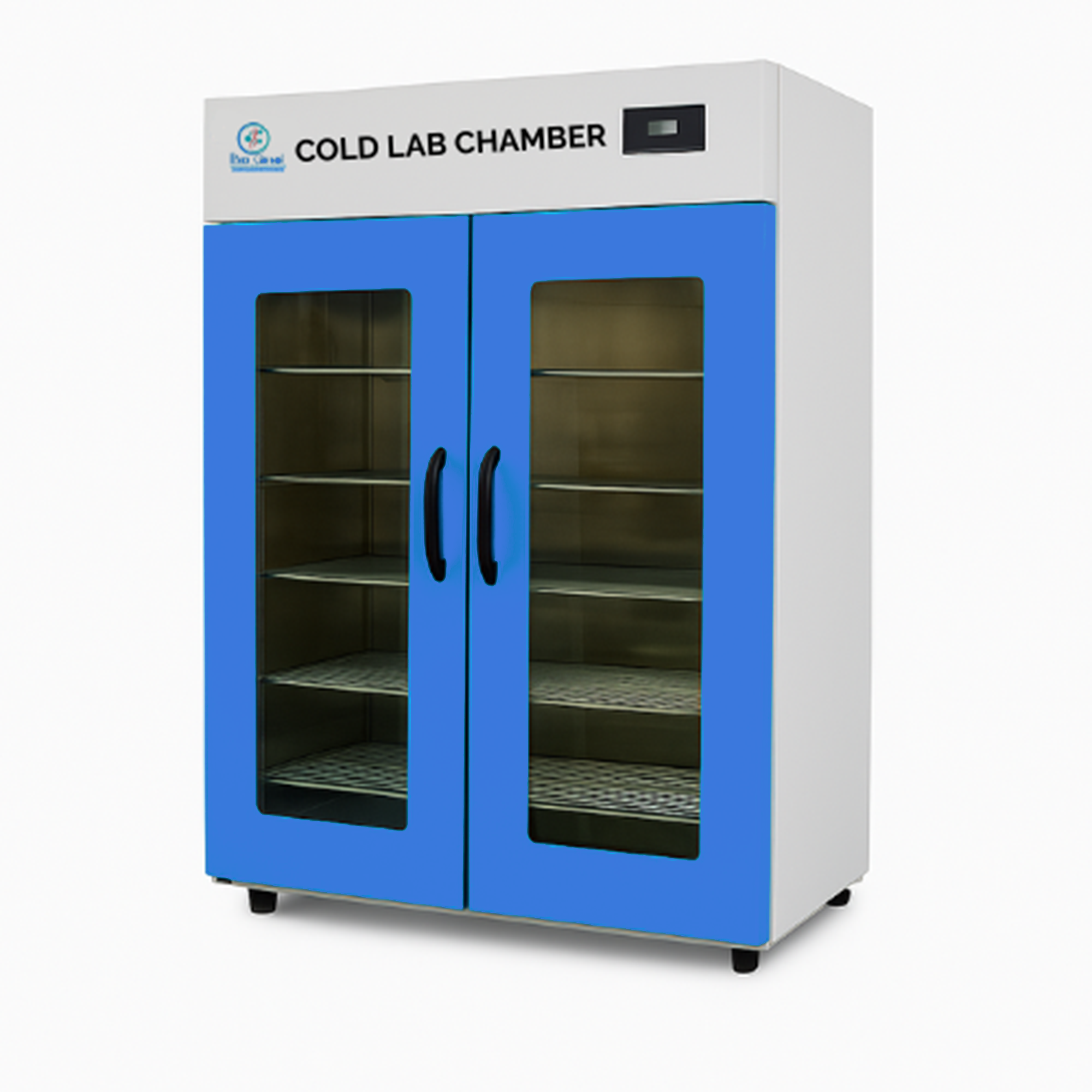
Frost fee cold lab chamber.
Automatic door closing.
Reversible door.
Digital temperature display.
Adjustable shelves (Chiller) Freezing shelves.
Digital micro processor controller with display (Optional )
100% Space utilization.
Digital micro processor controller with display.
Flexi shelving for better space utilization.
Precise temperature.
Look for Ensuring security of Medicines /Samples.
Castors for easy Mobility of Equipment.
Internal MATERIAL Cold rolled steel coated with Anti- Bacteria a powder.
External material cold rolled steel coated with Anti- Bacteria powder.
Refrigeration Type: Forced air Refrigeration system
Anybody design and Mono-Assembly foaming.
Control
Bio Gene LAB CHILLER have microprocessor controller for temperature and alarms.
Temperature range :- 0°C/2°C to 8°C
Low Noise Level around 50dBA.
Multiple Dual Layered insulated.
Front panel instruction
Micro processor based
Temperature controller
Single/Dual compressor controller
Range 0°C/2°C to 8°C
Sensor PT 100
Audio visual alarm
Door open Detection
SSR Output
Data logger with computer interface
PC software for Data Recorder.
TEST STANDARD GB/T5170.2, GB/T5170.5,IEC60601-1/IEC60068-3-6
Construction
Inner Chamber made of Stainless Steel, 304/316 Grade, and duly Polished.
Double walled units are made of thick stainless steel 304/316 grade.
Outer walled scratch free molded or of mild steel sheet duly powder coated.
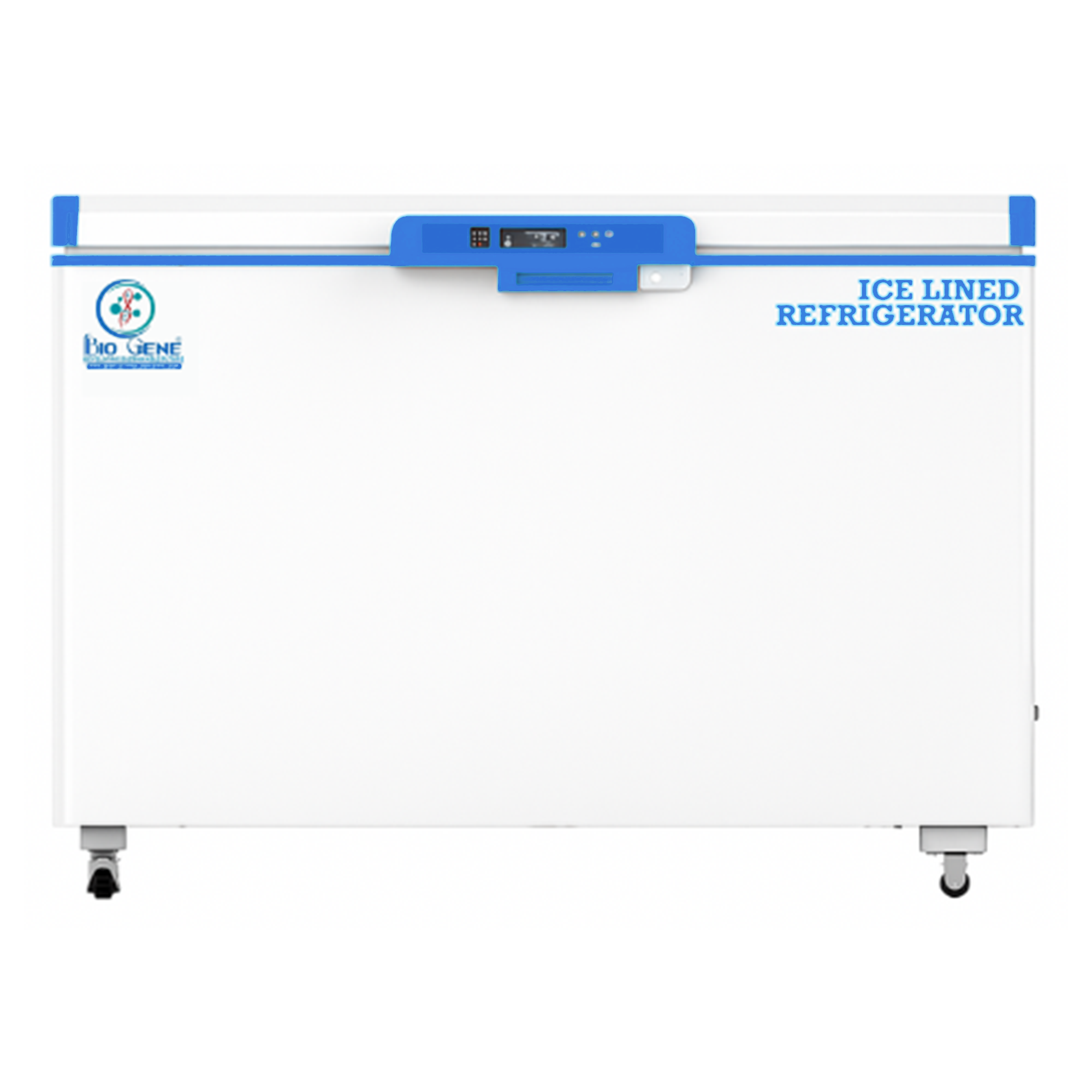
Body is mounted on a sturdy angle iron frame and is mounted on castor wheels.
Heavy Duty Castor wheels for easy movement.
Inner liner of door material is of stainless steel.
Coated with antimicrobial coating eliminates 99.9% surface bacteria within 24 hrs.
100% HCFC/CFC free refrigerant.
Magnetic door lock, latch able inner door with magnetic lock. Handle, lock and magnetic gasket for door.
Wheel locks and manual defrost.
Temp. Maintain 0°C/2°C to 8°C
Compressor with Cascade System.
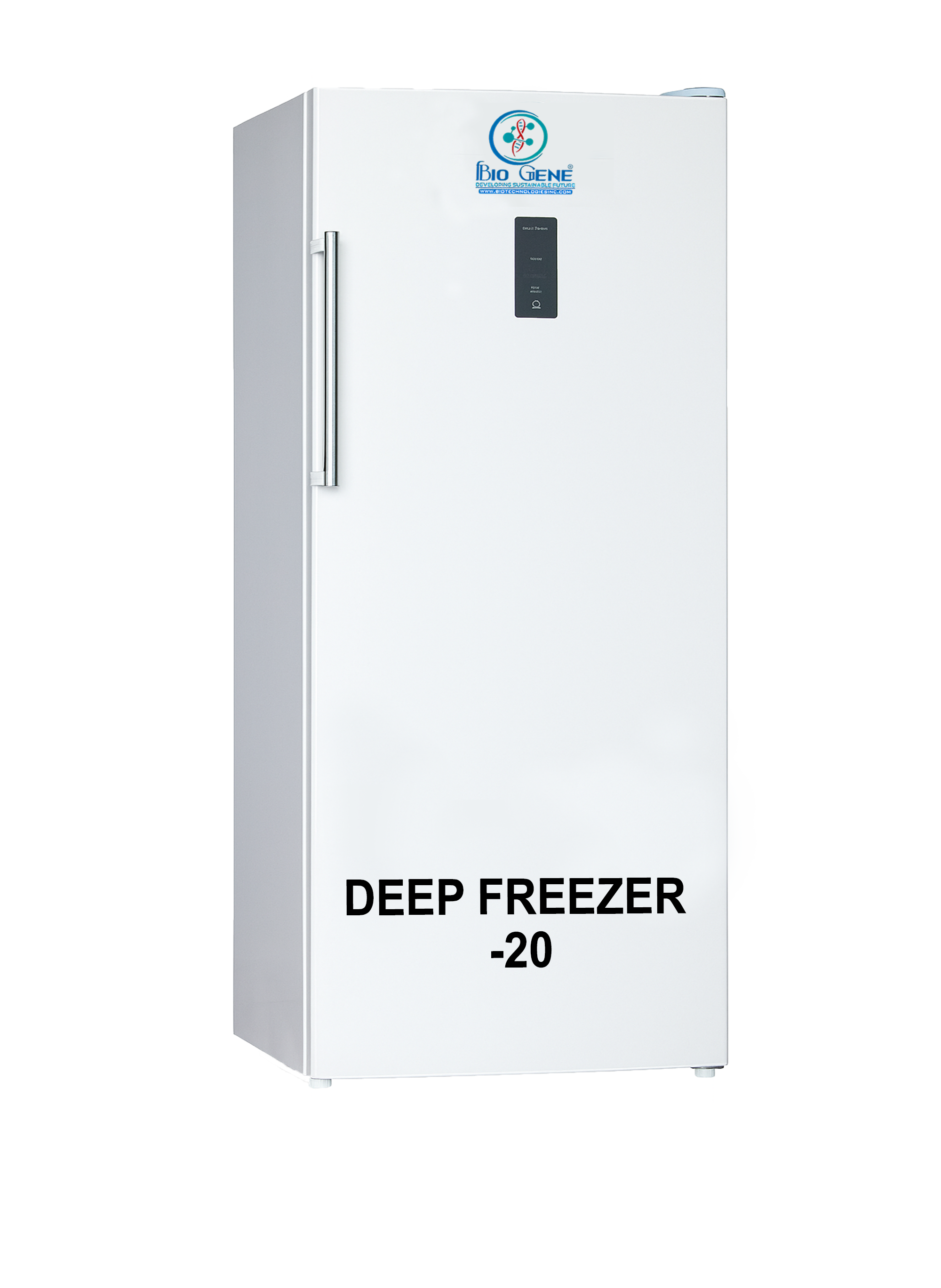
Bio Gene deep freezer has cascade refrigerator for minimizing cool air loss.
Double fan circulation system will be provided.
Single hand operation with an easy to use, padlock compatible, ergonomic door handles with integrated key lock.
Power Supply: Single phase. 220-240 Volts, Frequency 50 Hz.
Power Consumption ≤550 W
Electric Requirement: 25 amp.
Insulation Type: 75mm thick polyurethane foam.
MODEL BTI
LC-350
LC-750
LC-1000
LC-1100
LC-1200
LC-1500
CONTROL SYSTEM
Microprocessor control & Large
TEMPERATURE RANGE
0°C/2°C to 8°C
TEMPERATURE ACCURACY
0.1°C
DIGITAL DISPLAY
YES
LOCK
YES
NO OF SHELVES
3,4,6,8 SHELVES
WHEELS
YES
NO OF DOORS
2 /Solid
Refrigerant
R13 a, CFC Free
Power supply
AC 220 V ±10%, 50/60HZ
Defrost
Auto defrost
Condenser and Evaporator
High Efficiency air cooled condenser, made of copper
CAPACITY Liter
350 Liter
750 Liter
1000 Liter
1100 Liter
1200 Liter
1500 Liters
A lab chiller is used to remove heat from equipment, samples, or processes that need to be kept at a stable, controlled temperature. It circulates a cooled fluid (usually water or a water-glycol mixture) through connected instruments such as rotary evaporators, reactors, lasers, NMR systems, or other temperature-sensitive lab equipment, helping protect sensitive components and ensure consistent, repeatable results.
The right chiller depends mainly on the cooling capacity you need, the temperature range required, and the flow rate of your connected equipment. You should also consider the heat load generated by your process, the ambient temperature of your lab, and whether you need a recirculating chiller or an immersion/bath-style unit. If you're unsure, it's best to check your equipment's manual for its recommended cooling specifications or consult with a chiller specialist before purchasing.
Routine maintenance keeps a chiller running efficiently and extends its lifespan. Generally, you should check fluid levels and clarity monthly, clean or replace filters every few months, and inspect hoses, fittings, and condenser coils for dust or buildup periodically. A full professional service is typically recommended once a year, though usage frequency and lab conditions may change this schedule.
This is often caused by low fluid levels, a dirty condenser, a blocked filter, or the unit being placed too close to a wall, which restricts airflow. Start by checking the fluid level and ensuring there's enough clearance around the unit for ventilation. If the problem continues after basic checks, it's best to contact technical support, since it could indicate a refrigerant or compressor issue that requires professional attention.
Most lab chillers use distilled or deionized water for temperatures above freezing, while a water-glycol mixture is recommended for sub-zero operation to prevent freezing and corrosion. Always check your chiller's manual for the manufacturer's recommended fluid type and concentration, since using the wrong fluid can damage internal components or reduce cooling performance.
 Related Products
.jpeg)

 Chest Type.jpg)