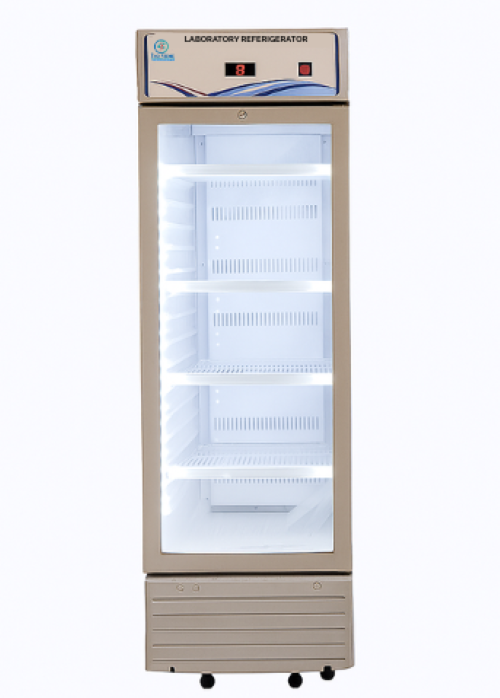
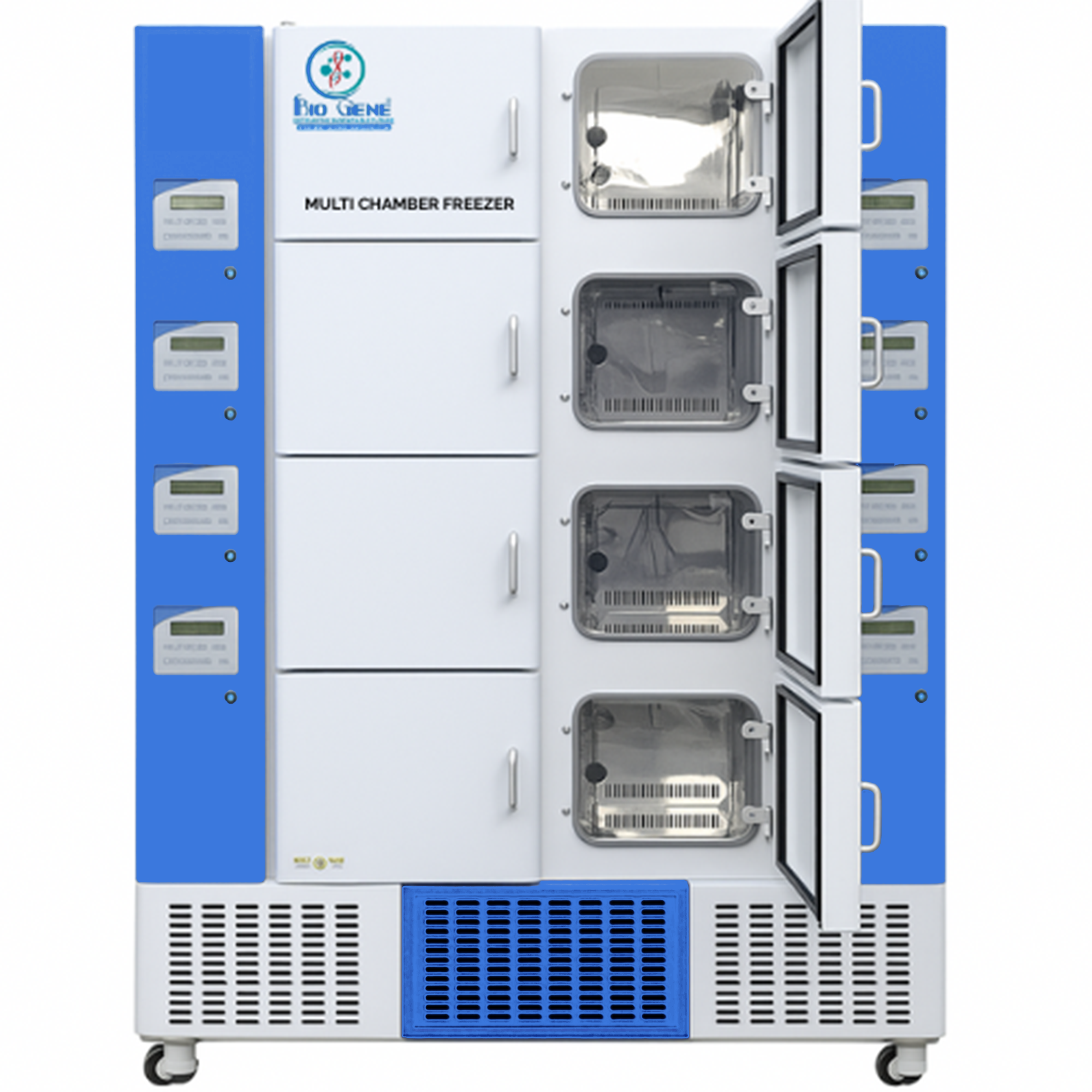
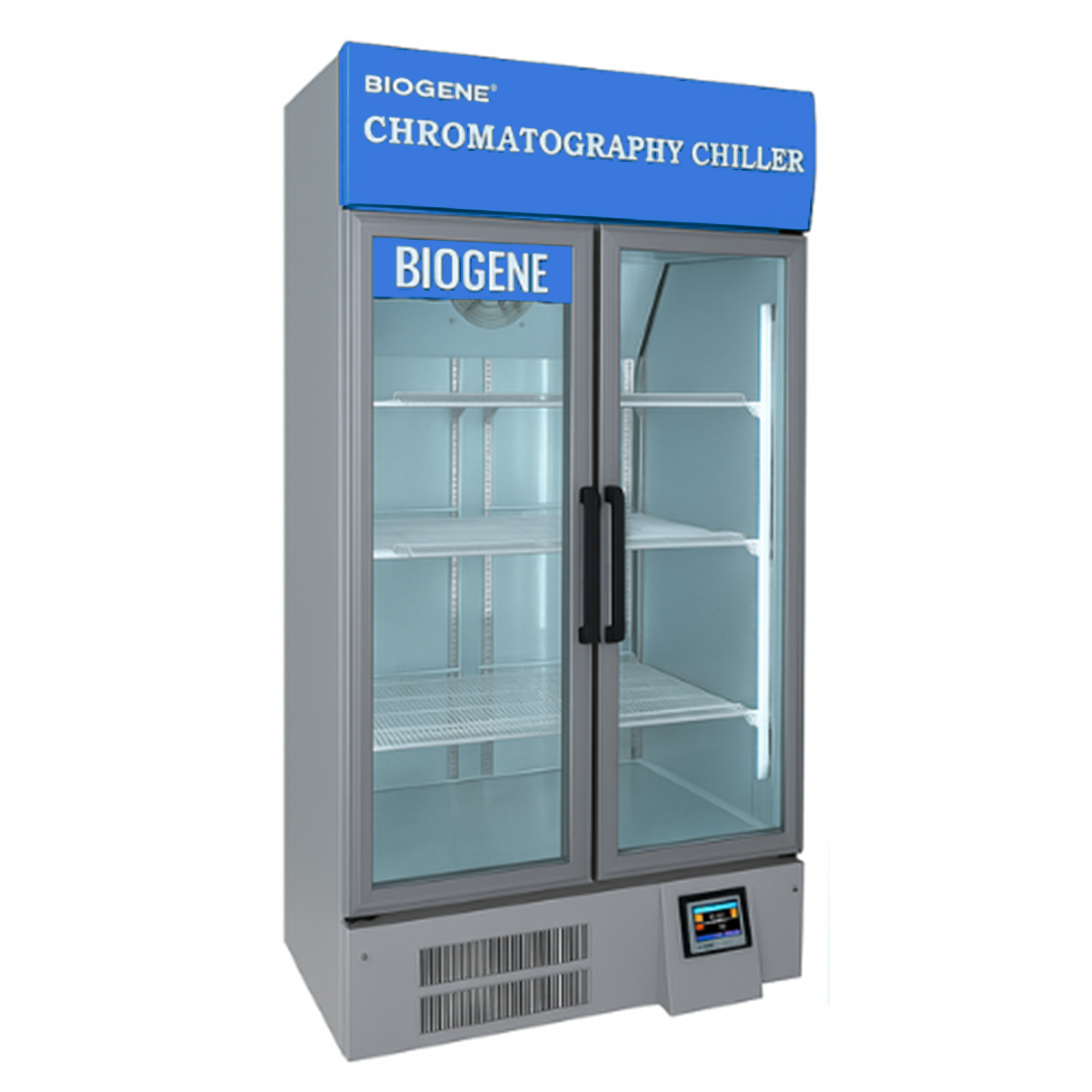
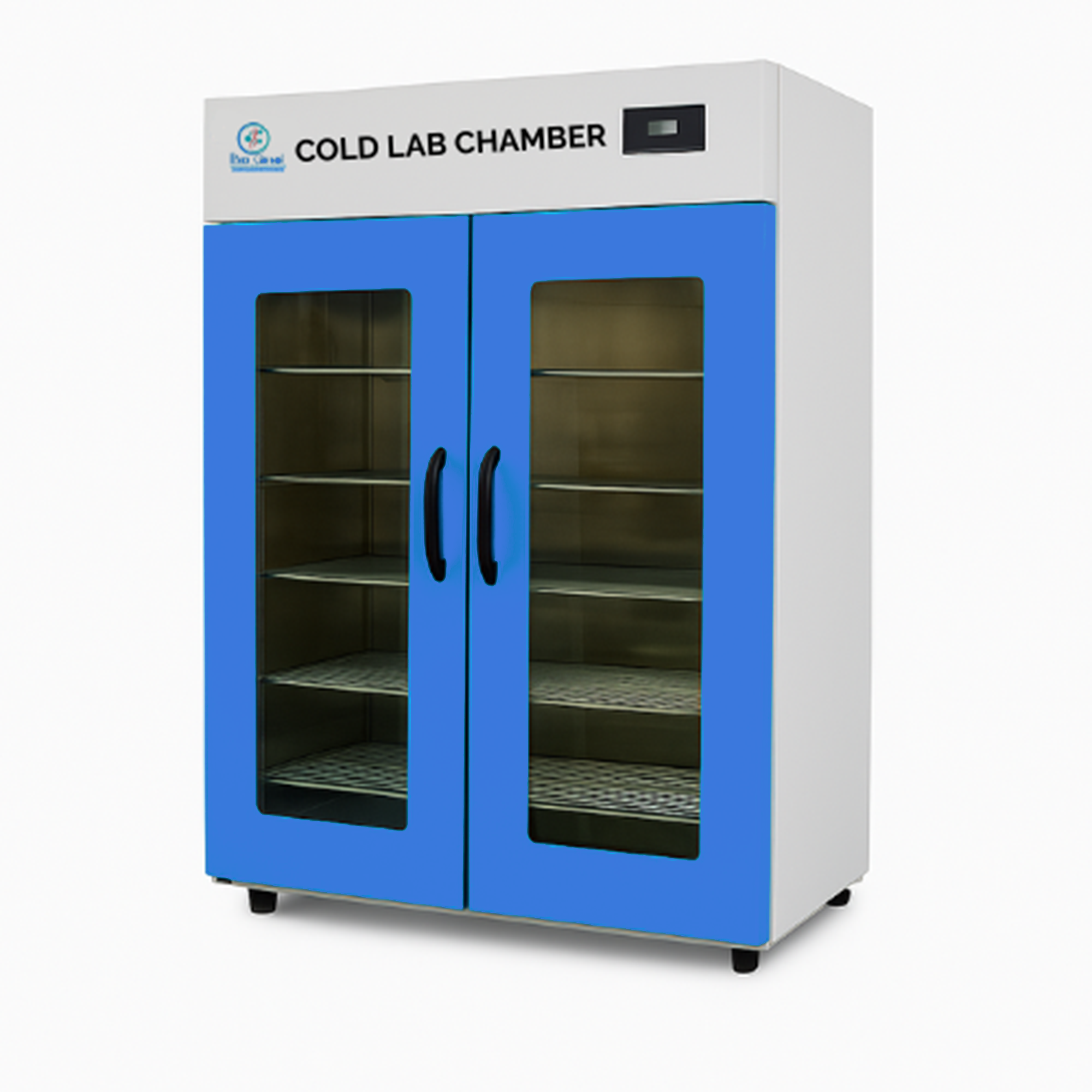
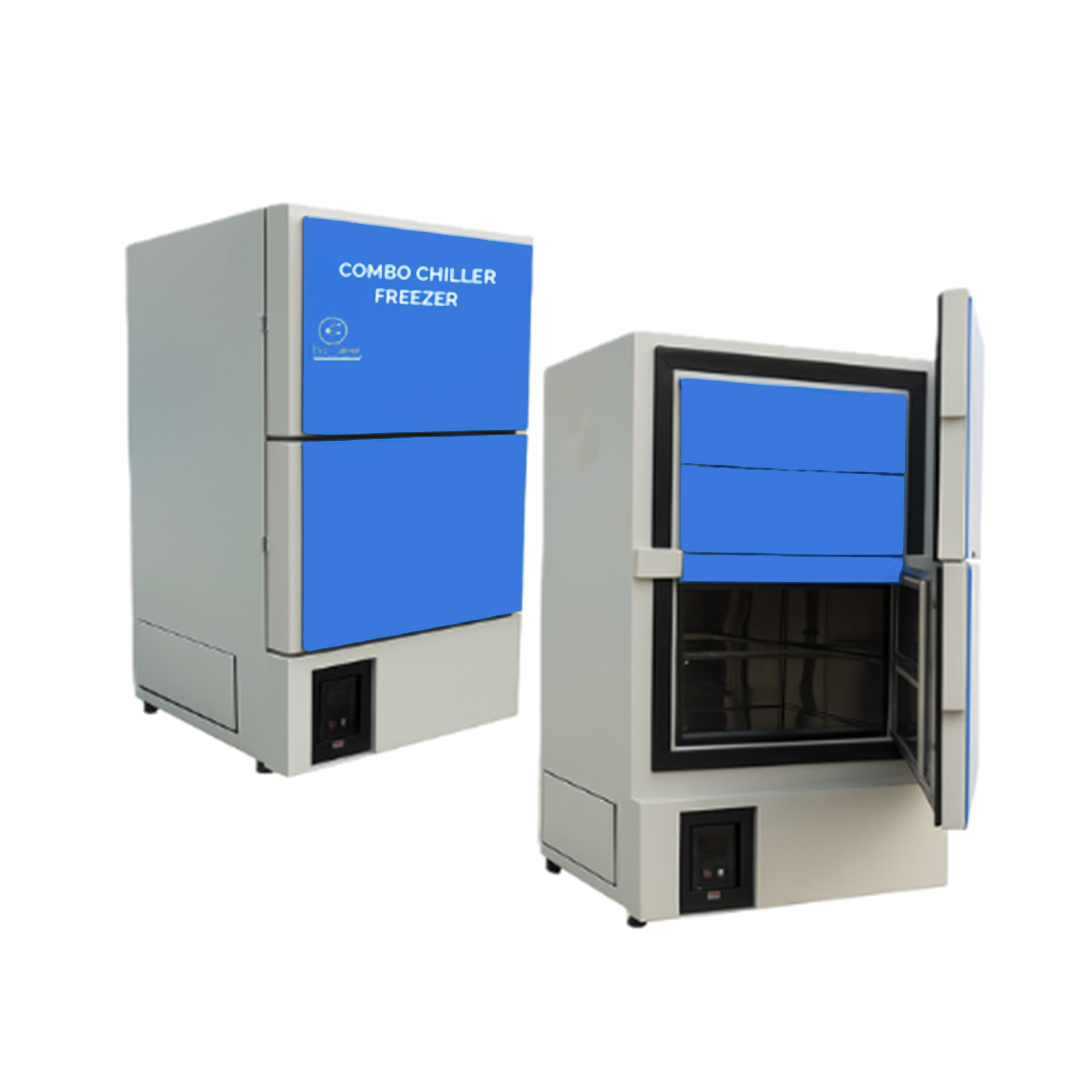
Bio Gene® COMBO CHILLER FREEZER are widely used in
- Electronic Industry for Delicate Parts
- Hospitals and Medical Facilities
- Dental Office & Laboratories
- Industrial Manufacturing
- Engineering Industries
- Research Centers
- Universities
- Gravimetric analysis
- Sintering
- Quantitative analysis
- Double walled units have thick PUF insulation between inner and outer wall.
- Double compartment (freezer & chiller)
- Temperature range: +8°C to -25°C
- Freezer Temperature : 16°C to -25°C
- Chiller Temperature : 2°C to -8°C
- MICROPROCESSOR BASED DIGITAL TEMPERATURE INDICATOR – CUM – CONTROLLER.
CONTROL SYSTEM:
- Microprocessor control system with enhanced electronic technology
- LCD/LED Display.
ALARM SYSTEM:
- Alarm system for high and low temperature visual warnings for over temp, under temp. & power failure, with visual status reports on critical functions.
TEMPERATURE CONTROLLER:
- Low Noise Level around 68dBA.
- Multiple Dual Layered insulated
- Inner Doors for easy Accessibility to Crucial samples.
- OUTER MADE CRCA Steel DULY Powder coated
- Insulation: PUF with cyclopentane, 4 inches.
- High Efficient Special Evaporator Defrost System.
- Castor For Easy Movement.
Biotech Application with operating temperature of -16ºC ˜ -25ºC and 2ºC – 8ºC
DOOR:
- Door outer one solid steel with keyed door lock handle
- Inner Doors:- Transparent
- Audio visual alarm at eye level.
- Hermetically sealed compressor with CFC free refrigerant.
- Cooling coils is distributed all around the chamber and lies in the air circulation path.
- Sensor failure alarm.
- Alarm for high/low set parameters.
- Electrical circuit breaker.
- Time delay for compressor switch on.
- Overload cut of relay for compressor.
- PUF Insulation
| MAKE |
CD-150 |
CD-200 |
CD-300 |
CD-450 |
CD-550 |
CD-650 |
| DESCRIPTION |
Deep Freezer |
| TOP CHAMBER TEMPERATURE RANGE |
+2ºC ˜-8ºC |
| BOTTOM CHAMBER TEMPERATURE RANGE |
-16ºC ˜-25ºC |
| TEMPERATURE ACCURACY |
±1ºC |
| DIGITAL DISPLAY |
Microprocessor Based Controller |
| LOCK |
Yes |
| No Of SHELVES |
2+ 5 Drawers |
| WHEELS |
2 (Rear) |
| NO OF DOORS |
1 Solid TYPE |
| PASSWORD LOCK |
Yes |
| DISPLAY |
LCD/LED |
| POWER SUPPLY |
Single phase, 230+/-10 volts 50Hz |
| CAPACITY LITERS |
150 |
200 |
300 |
450 |
550 |
650 |
A Combo Chiller Freezer is a dual-compartment appliance that combines a chiller section for everyday fresh food storage with a separate freezer section for frozen items, all in one unit. Unlike a standard refrigerator, it usually offers independent temperature control for each compartment, so you can keep your vegetables crisp while your frozen goods stay solidly frozen, without one affecting the other.
The chiller compartment typically works best between 1°C and 5°C for storing dairy, fruits, vegetables, and cooked leftovers. The freezer compartment should generally be set between minus 18°C and minus 22°C to keep meat, frozen vegetables, and ice cream properly frozen. Always check your specific model's manual, as recommended settings can vary slightly by brand and capacity.
Power consumption depends on the size, star rating, and usage habits of the unit. Most modern combo models are designed with energy-efficient compressors and better insulation, so they consume noticeably less power than older single-door units. Choosing a higher star-rated model, avoiding frequent door openings, and not overloading the compartments will help keep your electricity bill lower.
If your unit has an auto-defrost or frost-free feature, you won't need to defrost it manually, as it handles ice buildup automatically. For manual defrost models, it's best to defrost once ice builds up to about half a centimeter thickness. For cleaning, wipe down the interior with a mild detergent and warm water every two to four weeks, and check door seals regularly to make sure they're sealing properly.
First, check that the door is closing fully and the seals aren't damaged or dirty, since a poor seal lets warm air in. Next, make sure the unit isn't placed too close to a wall or heat source, as proper ventilation is needed for efficient cooling. If the compartments are overloaded, cool air may not circulate well, so try reorganizing items. If the problem continues after these checks, it's best to contact a certified technician rather than attempting internal repairs yourself.
 Related Products
.jpeg)

 Chest Type.jpg)