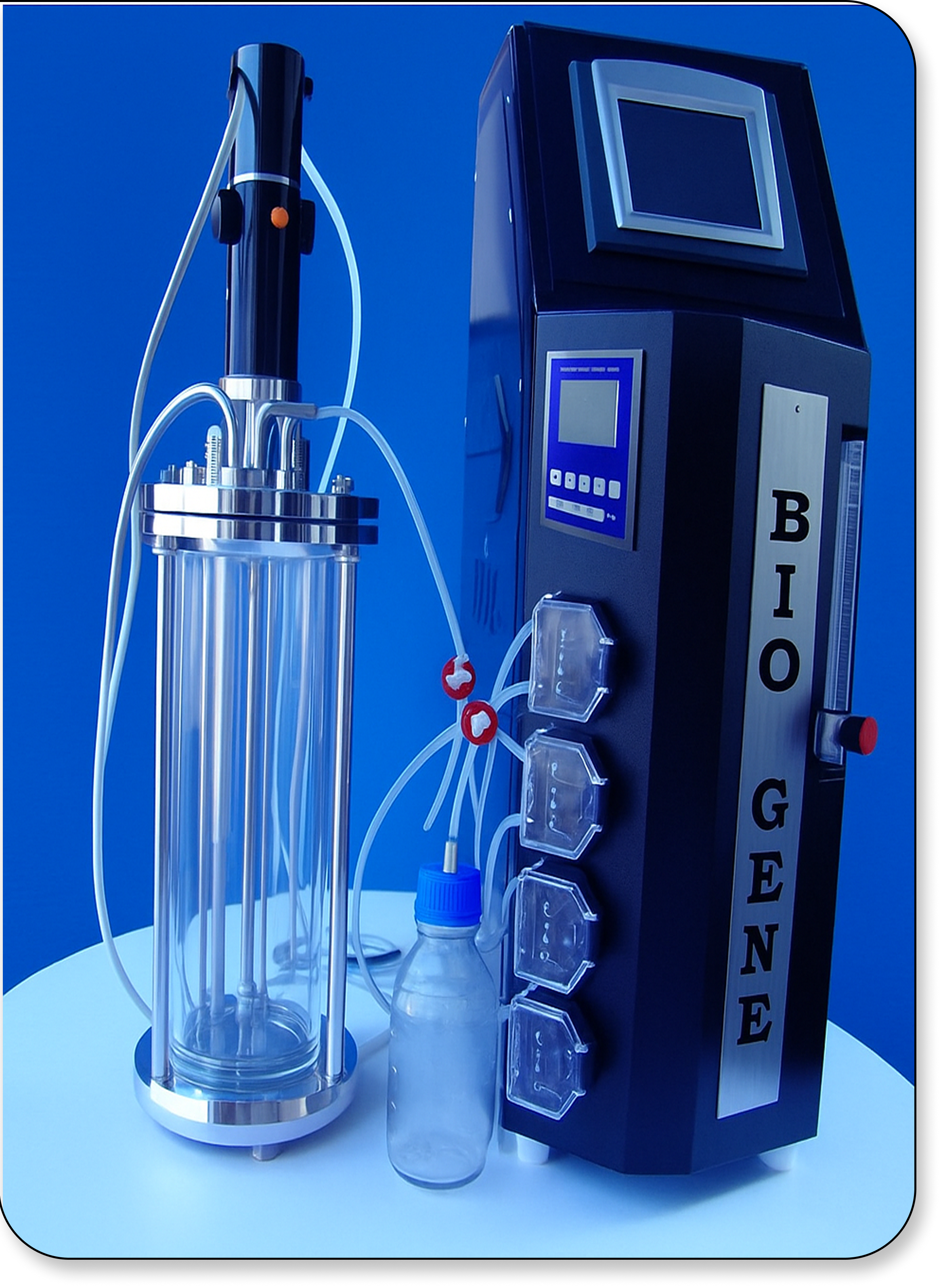
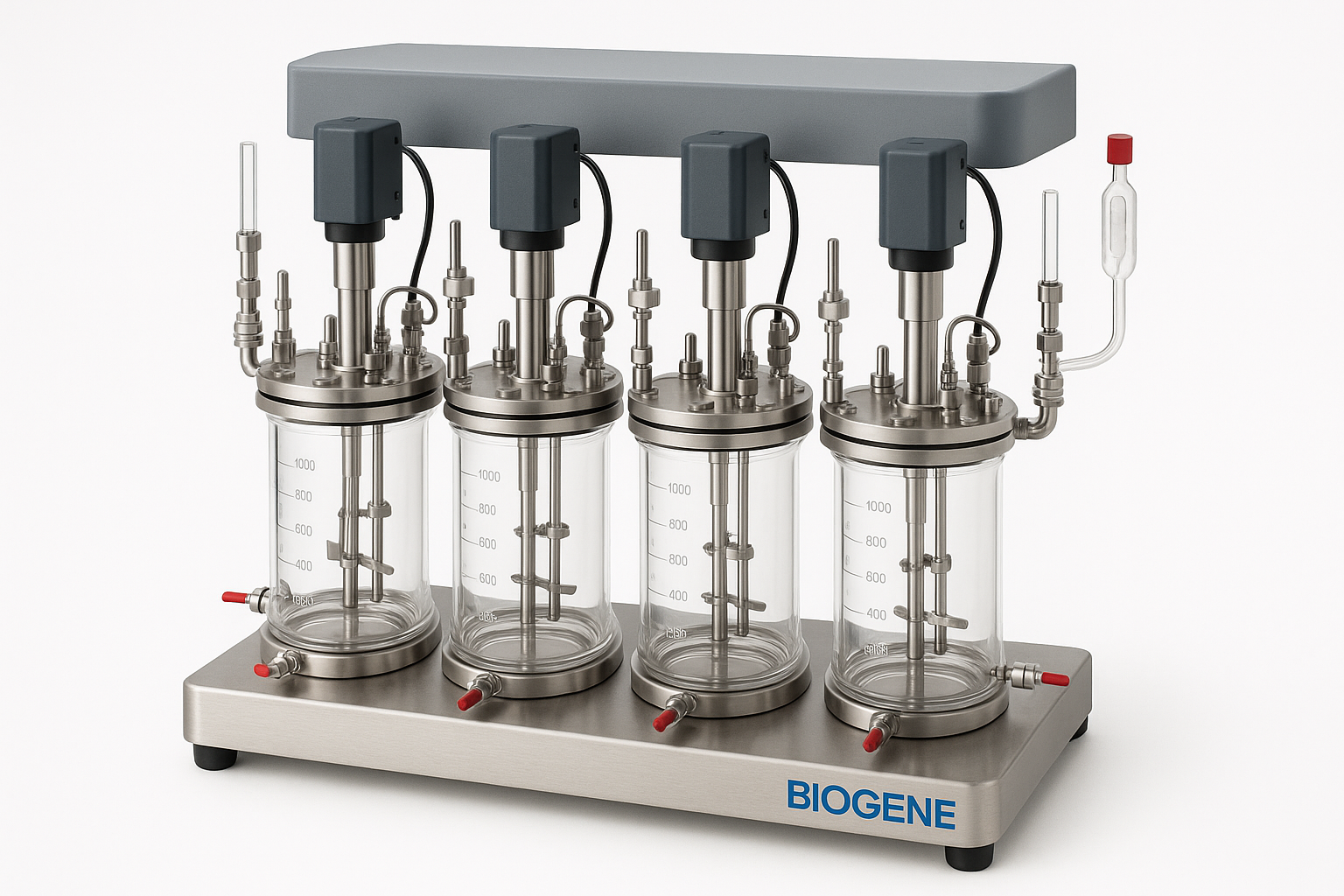
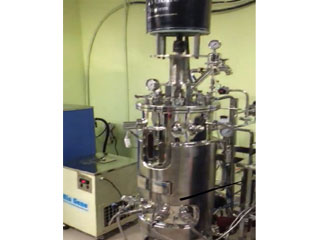
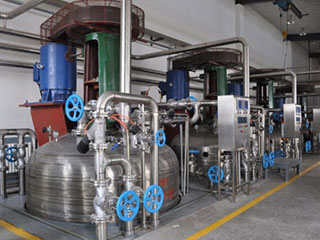
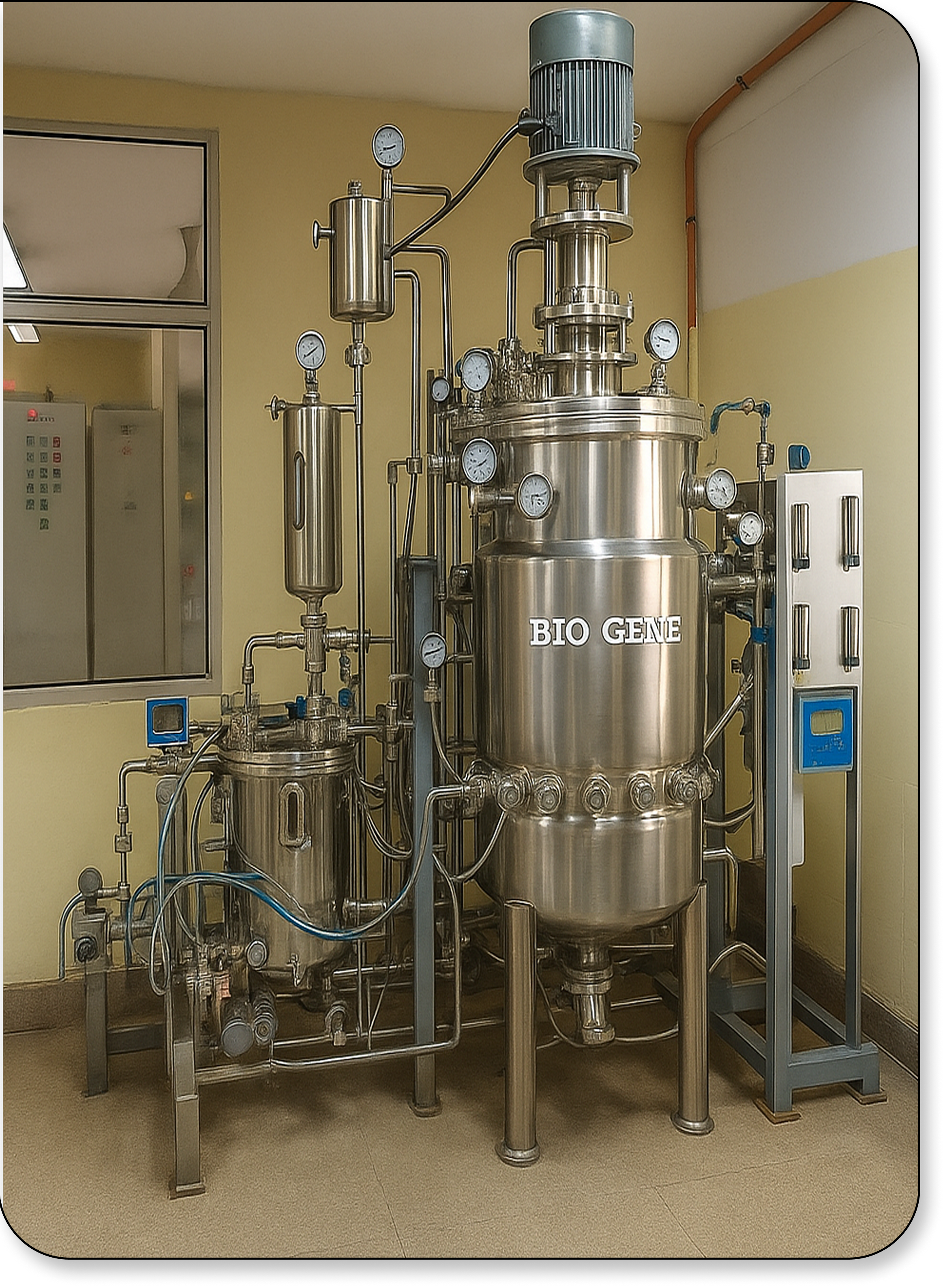
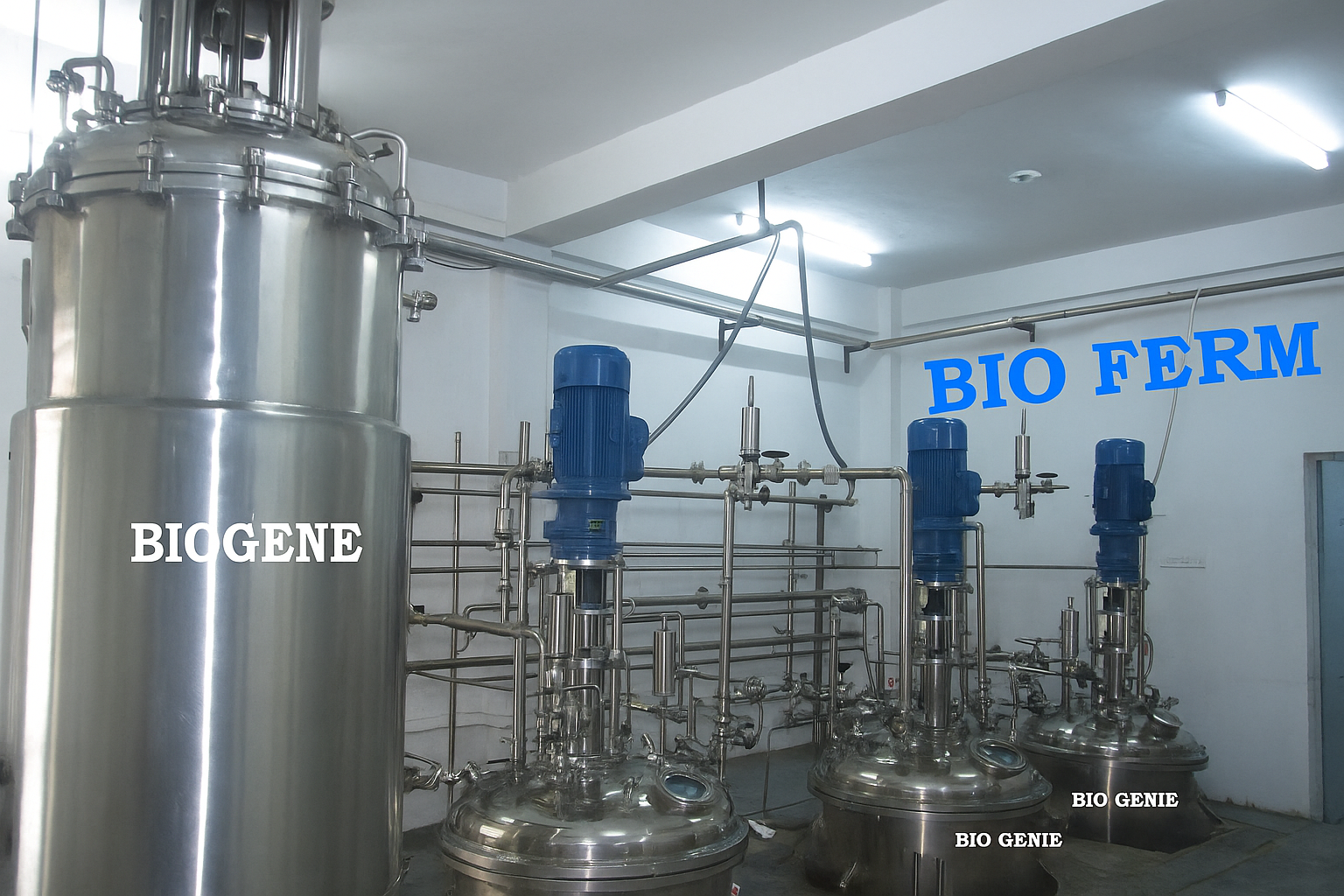
BioGene Large Industrial Fermenters are heavy-duty, fully automated bioprocessing systems designed for mass-scale microbial fermentation in the pharmaceutical, biotechnology, enzymes, food & beverage, and chemical industries. Manufactured and exported by Biotechnologies Inc., these fermenters feature SS316L-grade vessels, high-capacity agitation, sterilization-in-place (SIP), and clean-in-place (CIP) systems. Equipped with advanced PLC/HMI controls, real-time monitoring, and data logging capabilities, BioGene fermenters deliver scalable, contamination-free, and regulatory-compliant operations. Built in India and trusted globally, these systems ensure maximum yield, process reliability, and international GMP compliance.
BioGene Office large automatic industrial fermenter capable for batch production in the industries specially manufactured as per CGM be compliant with world best products and feedback Mechanisms,filters actuators cooling coils steam generation, motors valves to name a few from the world leaders.
Large Automatic Fermenter from BioGene are a true solution when productivity of cell lines is the target. Harvest different cells by BioGene enabled dedicated SCADa which are in use when target commercial products are Enzymes Lipase , invertase alchols acids etc are to be produced using G.M. microbes.
BioGene uses 316L grade stainless steel with 220 Grit finish from inside and 180 GRIT finish on the outer surface.
BioGene service team enables proper response to the users worldwide through online warranty and at site warranty as well.
This is one of the reason why automatic fermenters from BioGene are been successfully used all over the world in large industries and research centres. BioGene cares.
• Capacities from 200L to 2000L and beyond
• GMP-compliant stainless steel design (SS 316L)
• Protective Enclosure/Structure - External structure that would contain any fire or explosion
• Precise monitoring and control of temperature, pH, DO, and agitation
• Steam-in-place (SIP) and clean-in-place (CIP) systems
• Advanced aeration and mixing systems for optimal mass transfer
• High-efficiency cooling and heating jackets
• Modular design for easy integration into existing production lines
| Parameter | Specification |
|---|---|
| Capacity Range | 200L – 2000L+ |
| Material | SS 316L (product contact), SS 304 (non-contact) |
| Agitation System | Variable speed, top/bottom drive |
| Temperature Range | 4°C – 80°C |
| pH Control | 4.0 – 9.0 ± 0.05 |
| DO Control | 0 – 100% saturation ± 1% |
| Pressure Rating | Up to 3 bar |
| Cleaning System | CIP & SIP |
| Control System | PLC + HMI / SCADA |
| Power Supply | 3 Phase, 380–480V, 50/60Hz |

 Related Products