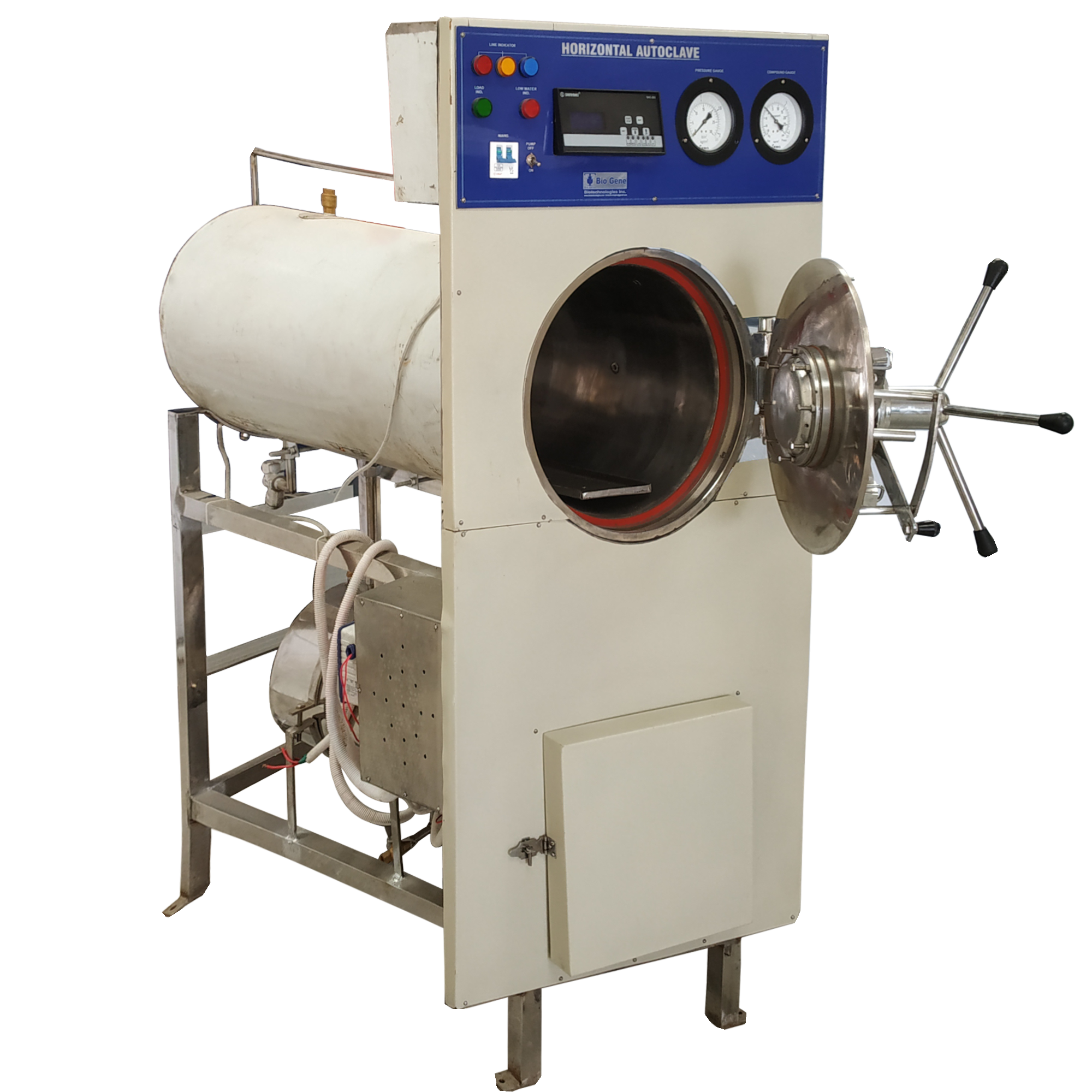
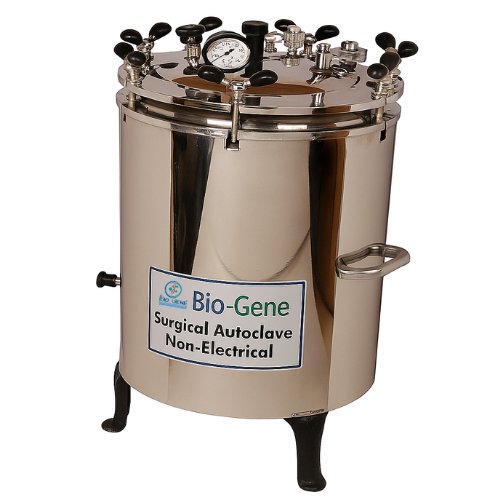
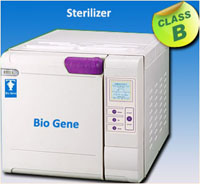
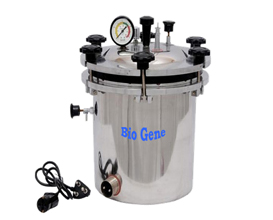
Hospital Waste, Medical & surgical Waste, Industrial Bio Hazard sterilization Non sterile to sterile movement.
- Double Door
- Dry and wet sterilization
- Confirm to EMD 93/42/EEC
- PID Controls
- Graphic & Logs
- Radial Lock
- On Line Printer
- Touch Screen
- Digital Temperature
- Digital Timer
- Pressure control
- Dry wet cycles
- Alarm
- Over Temperature
- Pressure Cut OFF Device
- Autoclave confirms to: ISO 13485, CMDCAS, FBAS, GMP. 21 CFR PART II software, NIST, OM-CP-AVS140-1/6.
- Triple walled
- Stainless steel 316 / 304.
- Microprocessor Based Controls
- Steam Generator 304/316
- Vacuum Breaker
- Solenoid valves
- Automatic water cut off device
- Trolley, carriage, Trays
- Digital Temperature, Time, Controls
- Pressure controls.
| MODEL |
BTI-RA-DD10 |
BTI-RA-DD12 |
BTI-RA-DD16 |
BTI-RA-DD55 |
| Make |
BIO GENE |
| Technical Matrix For |
Lab |
| Temperature range |
115ºC-121ºC
(Optional 132 ºC and above) |
| Trays |
2 |
| Temperature Sensor |
PT 100 |
| WORKING PRESSURE |
15 to 22 p.s.i |
| Inner chamber |
Stainless Steel Sheet (SS-304) |
| Outer chamber |
Stainless Steel Sheet (SS-316) |
| Temperature Controller |
Microprocessor Based Programmable Controller |
| Heat Load |
6 KW/ 9KW/ 9KW/ 9KW |
| Nominal Voltage |
220-230 Volts, 50Hz Single Phase |
| SIZE |
450 x 450 x 900mm |
600 x 600 x 900mm |
600 x 600 x 1200mm |
900 x 900 X 1800mm |
| CAPACITY-LTRS |
180 LTR |
340 LTR |
450 LTR |
1550 LTR |
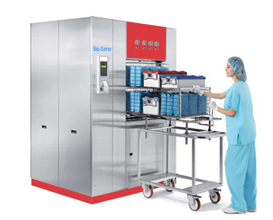
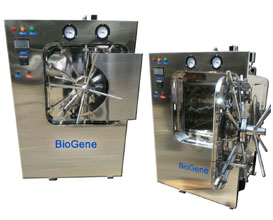
This autoclave is designed for large-scale sterilization of surgical instruments, glassware, textiles, rubber goods, and other medical or laboratory materials using high-pressure saturated steam. The rectangular chamber design allows for efficient loading of trolleys and baskets, making it ideal for hospitals, pharmaceutical units, and research laboratories that require high-volume sterilization on a daily basis.
A double door design means the autoclave has two separate doors located on opposite sides of the chamber, typically separating a "dirty" loading area from a "clean" unloading area. This setup prevents cross-contamination between unsterilized and sterilized materials, since items enter through one side and exit only after the sterilization cycle is complete through the other side. It is especially valuable in CSSD (Central Sterile Services Department) setups where maintaining a strict clean-to-dirty workflow is essential.
The unit works by first removing air from the chamber, then introducing high-pressure steam at controlled temperatures (commonly 121°C to 134°C) to destroy bacteria, viruses, spores, and other microorganisms. A typical cycle includes phases for air removal, steam exposure, sterilization holding time, and drying, and generally takes between 30 to 90 minutes depending on the load type, size, and selected program. Modern units often include pre-set programs for different material types to simplify operation.
These autoclaves are equipped with several safety mechanisms such as interlocking doors that prevent opening during an active cycle, pressure and temperature safety valves, overheat protection, and automatic pressure release systems. Most models also feature a digital or touchscreen control panel that displays real-time temperature, pressure, and cycle status, along with data logging or printer options to maintain sterilization records for compliance and audit purposes.
Routine maintenance includes daily cleaning of the chamber and door gaskets, regular checking of water quality used for steam generation, periodic testing with biological and chemical indicators to confirm sterilization efficacy, and scheduled professional servicing to inspect valves, seals, and electrical components. Following the manufacturer's maintenance schedule helps extend the equipment's lifespan and ensures consistent, reliable sterilization performance.
 Related Products