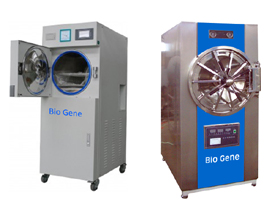
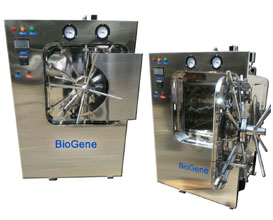
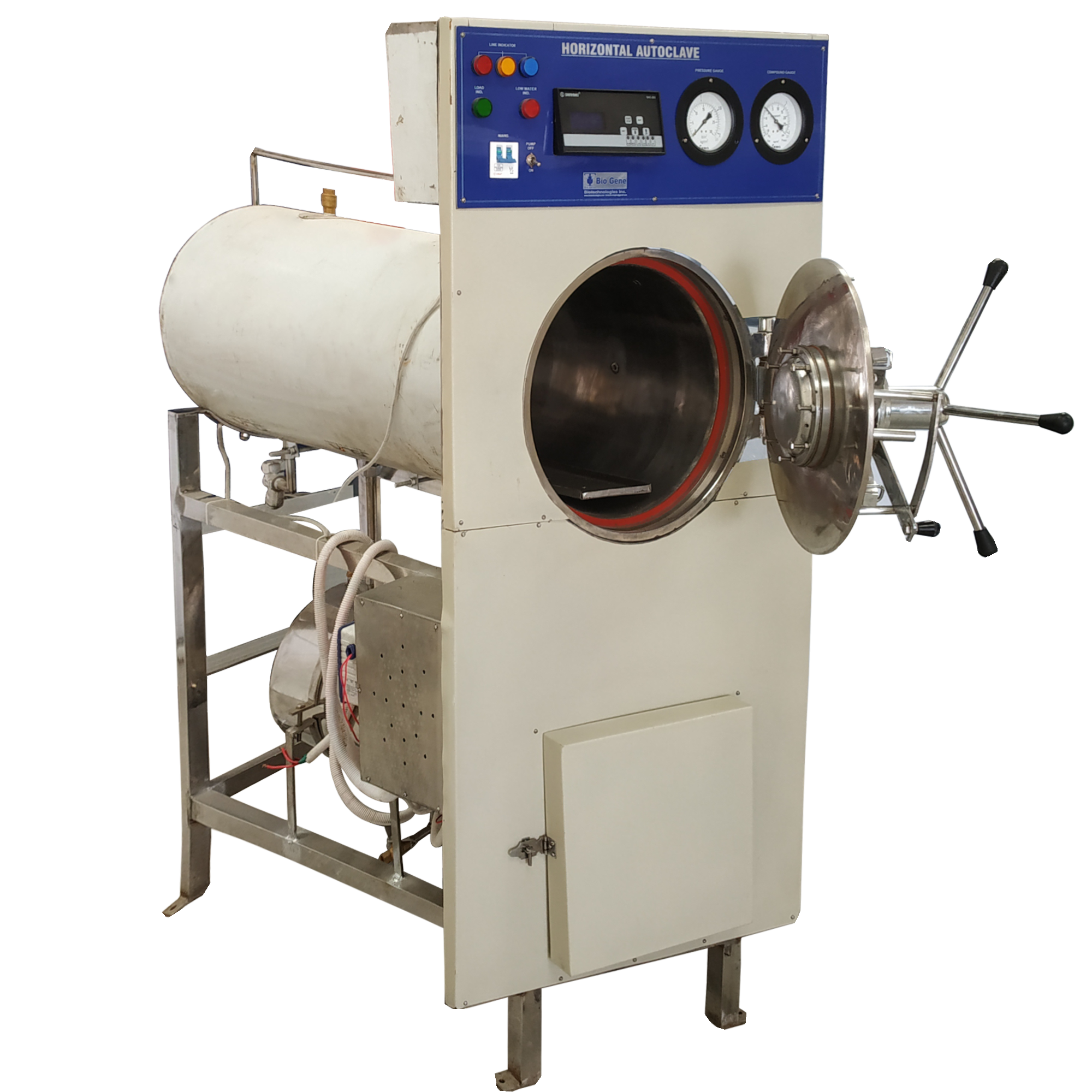
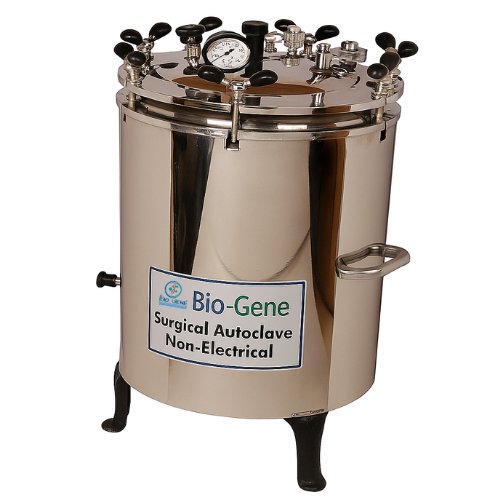
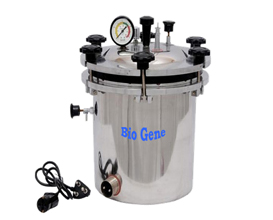
BioGene® Autoclave Horizontal Cylindrical Double Door is widely used in Research Centers, Major Universities, Pharma, Biotech, Medical research, Hospital, Diagnostics, Agriculture science, Pharmacology, Immunology, genetics, Bioengineering Biotechnology, Microbiology, Botany, Zoology etc.
- Ersatile usage.
- Ergonomic Design
- Energy Efficient
- Double Safety Radial Locking Arrangement
- Double Safety Valve Protection
- Hydraulic Testing Upto 2.5 times the working pressure
- Calibration And Protocol Documentation
- Microprocessor based controls.
- Data Logging System (Optional)
- Microprocessor Based Programmable controls/ Touch Screen HMI
- Temperature: 115 to 121/134ºC.
- PRESURE RANGE: 15 -22psi/32psi
- Time :- 0-99/999 Min
- Door Lock :- lockable
- Blower speed : ON/OFF
- Alarm : Temperature Timer
- Sterilization : Cycle
- Process: Start. End
- Air : Class 100
- EN: 60601 : 1
- EMD : 93/42/EEC
BioGene Horizontal Cylindrical Double Door Autoclave is double walled units. The inner chamber is made of heavy gauge stainless steel sheet of SS-304 grade. The Outer body of our Autoclave is constructed out of thick Steel Sheet.
BioGene Autoclave are air insulated from inside, however we may incorporate mineral glass wool insulation if the customer desires so. The strong lid constructed out of thick steel plate which is machined and polished Stainless Steel -304 grade.
Double safety radial locking arrangement , which ensures an easy and smooth opening and closing operation for all Bio Gene CYLINDRICAL autoclaves are ideally suited for hospitals and research labs where safety is the first priority of the users, since it is equipped with a double safety steam release valve. At the same time we test all our autoclaves for up to 2.5 times the standard working pressure to ensure maximum safety and protection from any unfortunate incident... All our CYLINDRICAL autoclave are supplied complete with pressure gauge, pressure release valve and stainless steel Trays as a standard feature.
| MODEL |
BTI-CA-DD4 |
BTI-CA-DD6 |
BTI-CA-DD10 |
BTI-CA-DD15 |
BTI-CA-DD20 |
| Make |
BIO GENE |
| Technical Matrix For |
Lab |
| Temperature Sensor |
PT 100 |
| Basket |
1 |
| Temperature range |
115ºC-121ºC |
| Temperature Controller |
Microprocessor Based Programmable Controller |
| WORKING PRESSURE |
15 to 22 p.s.i |
| INNER CHAMBER |
Stainless Steel Sheet |
| Outer body |
Covered Mild steel |
| Heat Load |
6KW/ 9 KW/10 KW/ 10 KW/ 12KW |
| Nominal Voltage |
220-230 Volts, 50Hz Single Phase |
| SIZE |
450 x 750mm |
500 x 900mm |
500 x 1200mm |
600 x 1200mm |
600 x 1500mm |
| CAPACITY |
120 LTR |
175 LTR |
250 LTR |
350 LTR |
450 LTR |
A Horizontal Cylindrical Double Door Autoclave is a steam sterilization unit designed with a horizontally oriented cylindrical chamber and two doors positioned at opposite ends. It is primarily used in hospitals, pharmaceutical facilities, and research laboratories where a clear separation between the "dirty" (loading) side and the "clean" (unloading) side is required. Items are loaded from the contaminated area, sterilized inside the chamber using high-pressure saturated steam at controlled temperature and time cycles, and then removed from the sterile side, preventing any cross-contamination between the two zones.
The double door configuration creates a physical barrier between contaminated and sterile environments, which is essential for maintaining strict infection control protocols in critical areas such as central sterile supply departments (CSSD), operation theatres, and pharmaceutical manufacturing units. This design minimizes the risk of recontamination, improves workflow efficiency by allowing continuous one-directional movement of materials, and helps facilities comply with regulatory and hygiene standards more effectively than a single door unit.
This autoclave is suitable for sterilizing a wide range of materials including surgical instruments, glassware, textiles, dressings, rubber goods, and certain pharmaceutical and laboratory equipment. It is particularly effective for bulk sterilization of heat and moisture-resistant items. Customers should always check the material compatibility and recommended cycle settings for their specific load type, as sensitive or heat-labile items may require alternative sterilization methods.
Routine maintenance includes daily inspection of door gaskets and seals, regular cleaning of the chamber and drain filters, checking steam and water quality, and monitoring pressure gauges and safety valves for proper function. Preventive servicing by a qualified technician is generally recommended every three to six months, or as specified by the manufacturer, to ensure consistent sterilization performance, extend equipment lifespan, and maintain compliance with safety standards. Regular calibration and validation checks are also advised, especially in regulated environments.
Customers should look for autoclaves equipped with interlocking door safety mechanisms that prevent both doors from opening simultaneously, automatic pressure release systems, over-temperature and over-pressure cutoffs, and audible or visual alarms for cycle completion or malfunction. It is also important to verify that the unit complies with relevant national and international standards such as CE, ISO, or ASME certification, depending on the region of use, to ensure both operator safety and reliable sterilization outcomes.
 Related Products