Applications
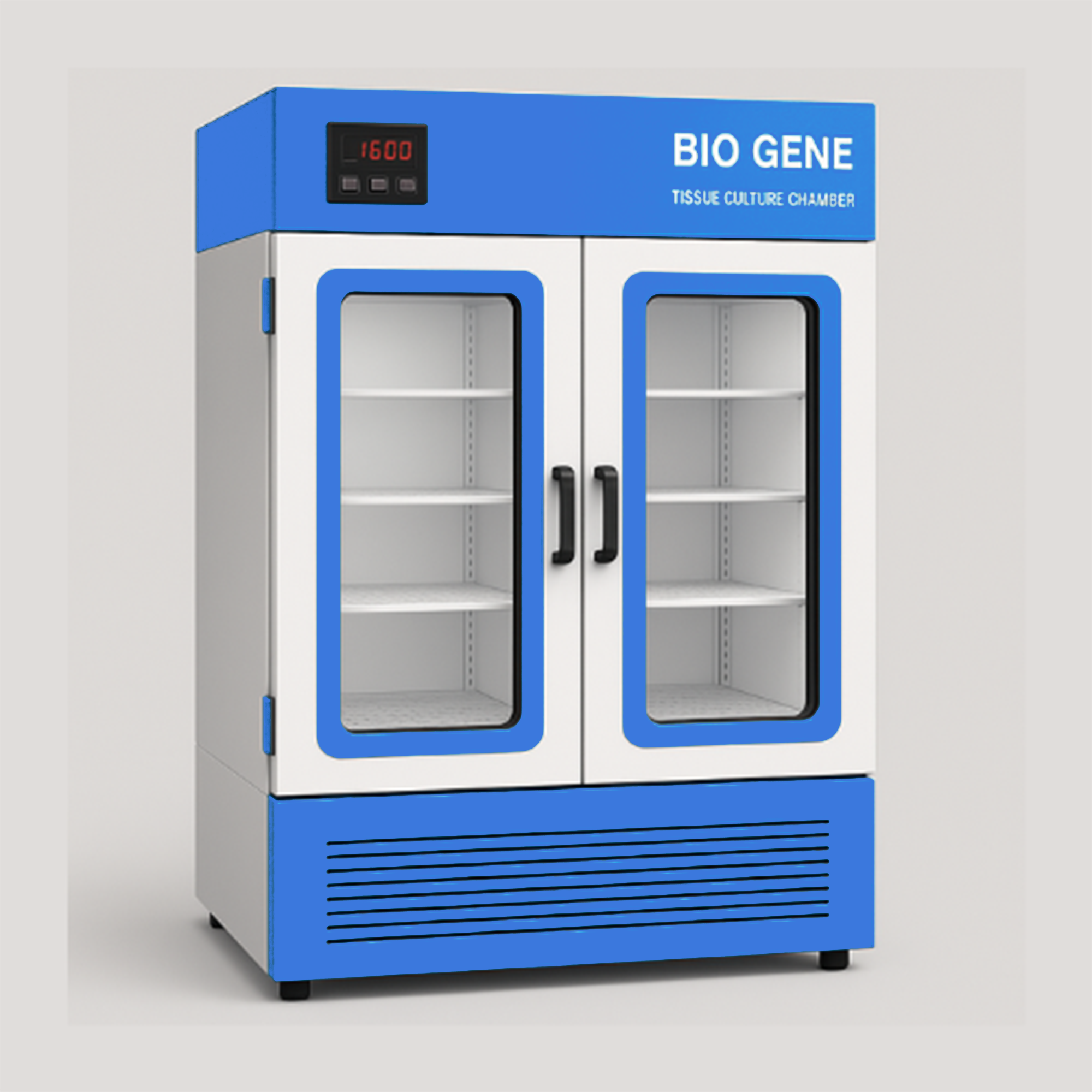
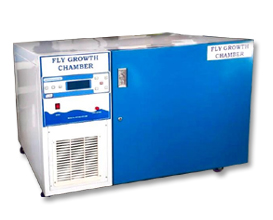
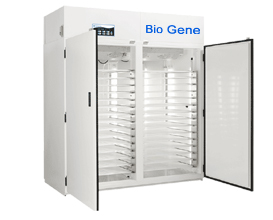
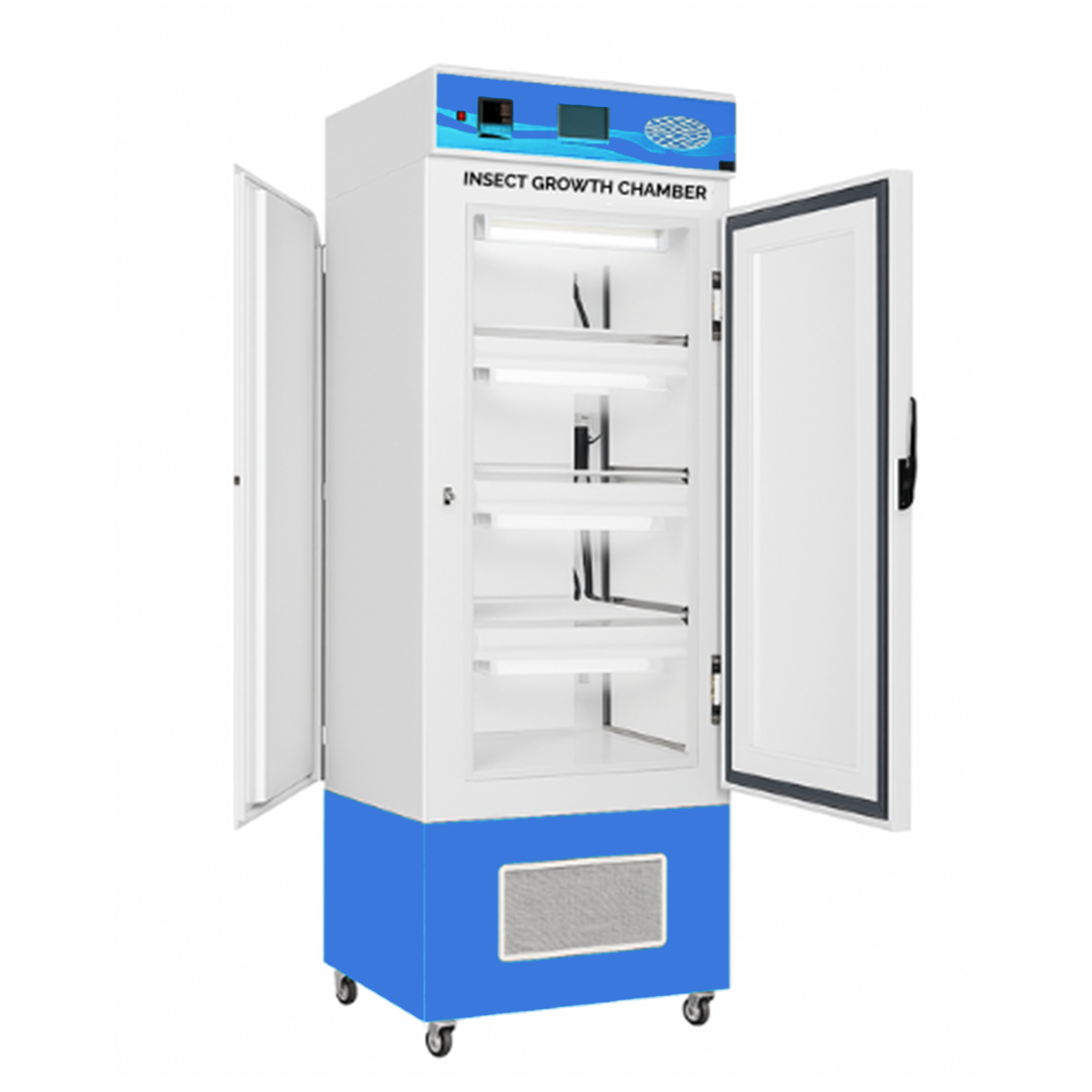
BioGene Insect Growth Chambers provide precisely controlled environmental conditions for diverse research and industrial uses. Designed for insect rearing, breeding, and observation under reproducible conditions, they support academic, biotechnology, and defence-related studies.
- Controlled breeding and rearing of various insect species including mosquitoes, beetles, and moths
- Entomological and genetic research studies on insect life cycles, growth rates, and environmental responses
- Developmental biology and mutation studies under controlled photoperiod and humidity conditions
- Insect behavior, ecology, and vector biology investigations
- Research applications for agriculture, pest control, and defense laboratories
- Education and teaching support in zoology, entomology, and biotechnology institutes
Feature
- Coated refrigeration coils resist the corrosive effects of acids inherent in the rearing of insects.
- Insect Growth Chamber Programmable refrigeration saves electricity, contributing to lower utility bills.
- The BioGene insect growth chamber humidity system, delivers controlled humidity without wasting energy or generating heat and supports lower production costs.
- Our Insect Growth Chamber's unique design includes helps flexing comportments through steps of interior components.
- Bio Gene Insect Growth Chamber has Horizontal airflow system generates airflow across all shelf locations.
- Our Insect Growth Chamber comes complete with factory-installed, heavy-duty casters.
- Bio Gene Insect Growth Chamber comes complete with factory-installed, heavy-duty casters.
- The stainless steel interior chamber and shelving are easily cleaned and highly resistant to corrosion.
- The ergonomically designed door handle allows easy access into the chamber and contributes to workplace efficiency.
- Microprocessor-based optional lighting system simulates day/night studies. The low-profile, side-mounted lighting system allows full utilization of the chamber interior, and complete access to the sliding shelves is an added design feature of our insect growth chamber.
- Optional Fluorescent Lighting System includes a cycle timer to simulate diurnal conditions for day/night studies.
Control
- Digital microprocessor PID controller with bright LCD/LED display.
- Programmable temperature and humidity control with real-time feedback.
- Independent light cycle control (0–100% intensity) for insect photoperiod studies.
- Optional automatic CO₂ regulation with built-in safety alarms.
- Over-temperature protection and system alarms ensure experiment safety.
- Memory backup for saved programs and automatic restart after power recovery.
- Optional PC interface for audit trail, data recording, and remote monitoring.
Construction
- Inner chamber made of corrosion-resistant stainless steel (SS 304)
- Outer body constructed from powder-coated mild steel for durability
- High-density CFC-free PUF insulation ensures uniform internal temperature
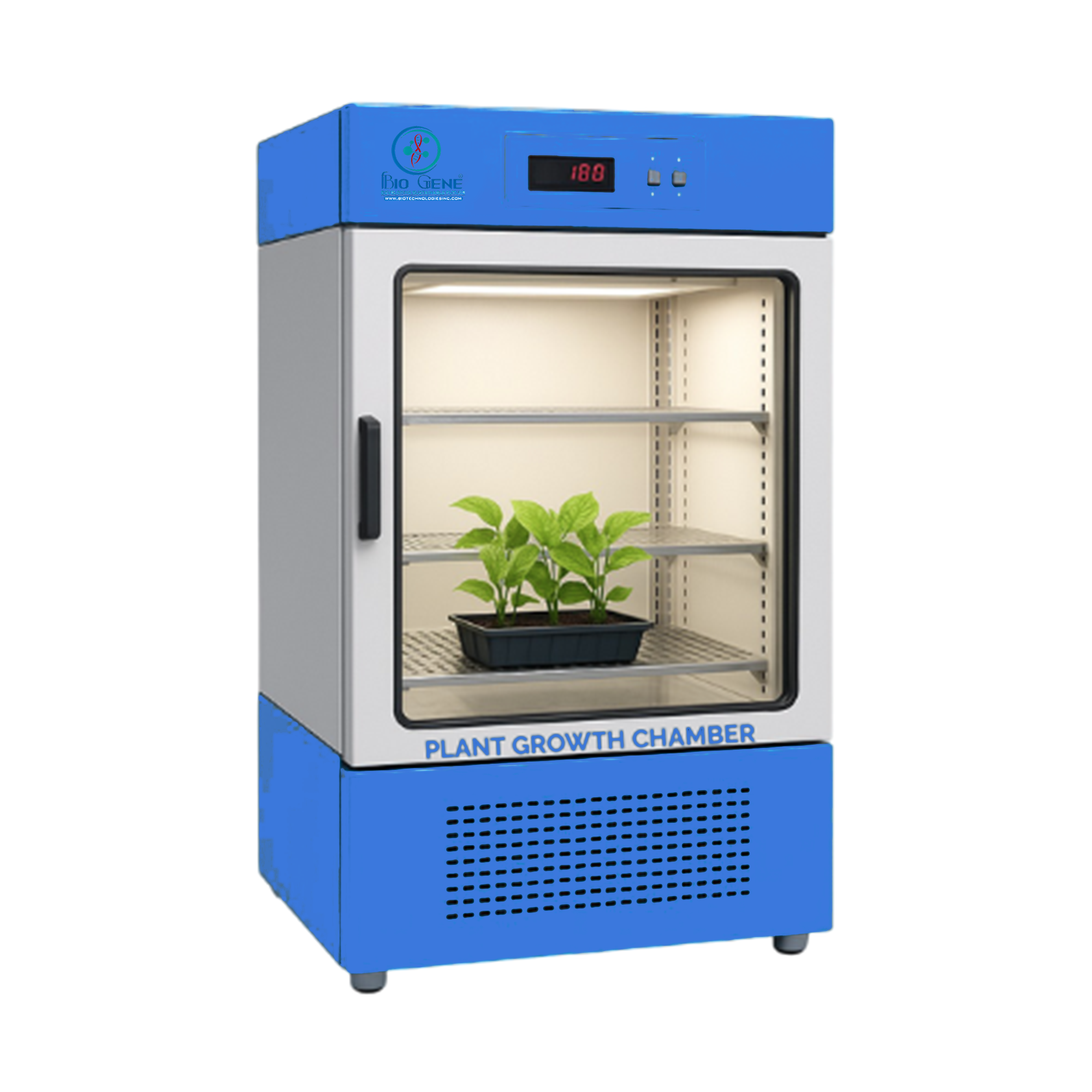
- Full-view glass door with magnetic gasket for easy observation without contamination
- Adjustable stainless steel shelves for flexible specimen placement
- Caster-mounted base for mobility and stability during operation
- Hermetically sealed compressor with eco-friendly refrigerant
- LED lighting system provides uniform illumination and long service life
Specification
| Temperature Range |
5°C to 70°C |
| Temperature Control |
±0.1°C |
| Temperature Uniformity |
±0.3°C |
| Temperature Sensor |
RTD |
| Humidity Range |
20% to 95% ±3% |
| Humidity Control |
±3% RH |
| Humidity Sensor |
Capacitive |
| Interior Dimensions |
30"W x 25"W x 55"H |
| Work Space |
25 cu. ft. |
| No of Shelves |
3 Standard, 25 Maximum |
| Materials/Finishes |
| Interior Construction |
Type 304, 2B Finish, Solid Stainless Steel |
| Exterior Construction |
Cold Rolled Steel, Powder Coated |
|
Electrical |
220V, 50 Hz |
| Shipping Weight |
400 kg |
An Insect Growth Chamber is a specialized equipment designed to provide a controlled environment for rearing, breeding, and studying insects. It precisely regulates temperature, humidity, and lighting conditions to simulate natural or specific experimental conditions. Researchers, entomologists, and agricultural scientists commonly use it to study insect life cycles, conduct pest control research, test pesticide efficacy, and support academic research in entomology and biology.
Most insect growth chambers offer a wide operating range, typically between 0°C to 50°C for temperature and 30% to 95% relative humidity, though exact specifications vary by model. This flexibility allows users to replicate conditions suited to different insect species, from tropical pests requiring high humidity to temperate species needing cooler, drier environments. Precise control ensures consistent and reproducible results across experiments.
The chamber is equipped with programmable LED or fluorescent lighting systems that allow users to set specific light intensity and photoperiod cycles, such as 12 hours light and 12 hours dark. Lighting plays a crucial role in insect development, as many species rely on light cues for molting, diapause, and reproductive behavior. Accurate lighting simulation helps ensure insects behave and develop as they would under natural conditions.
Regular maintenance involves cleaning the interior chamber walls and shelves with a mild disinfectant to prevent mold, bacteria, or pest contamination between studies. It is also important to periodically check and calibrate the temperature and humidity sensors, inspect door seals for proper insulation, and clean or replace air filters as recommended by the manufacturer. Following a consistent maintenance schedule extends the chamber's lifespan and ensures data accuracy in ongoing research.
Users should always follow the manufacturer's operating guidelines, avoid overloading the chamber with too many samples, and ensure proper ventilation when working with sensitive biological materials. It is also advisable to monitor the chamber regularly for any unusual noises, temperature fluctuations, or error alerts, and to have a backup power source in case of outages, since prolonged power loss can compromise ongoing insect colonies or experiments. Wearing appropriate protective gear when handling insects or chemicals used in testing is also recommended.

 Related Products