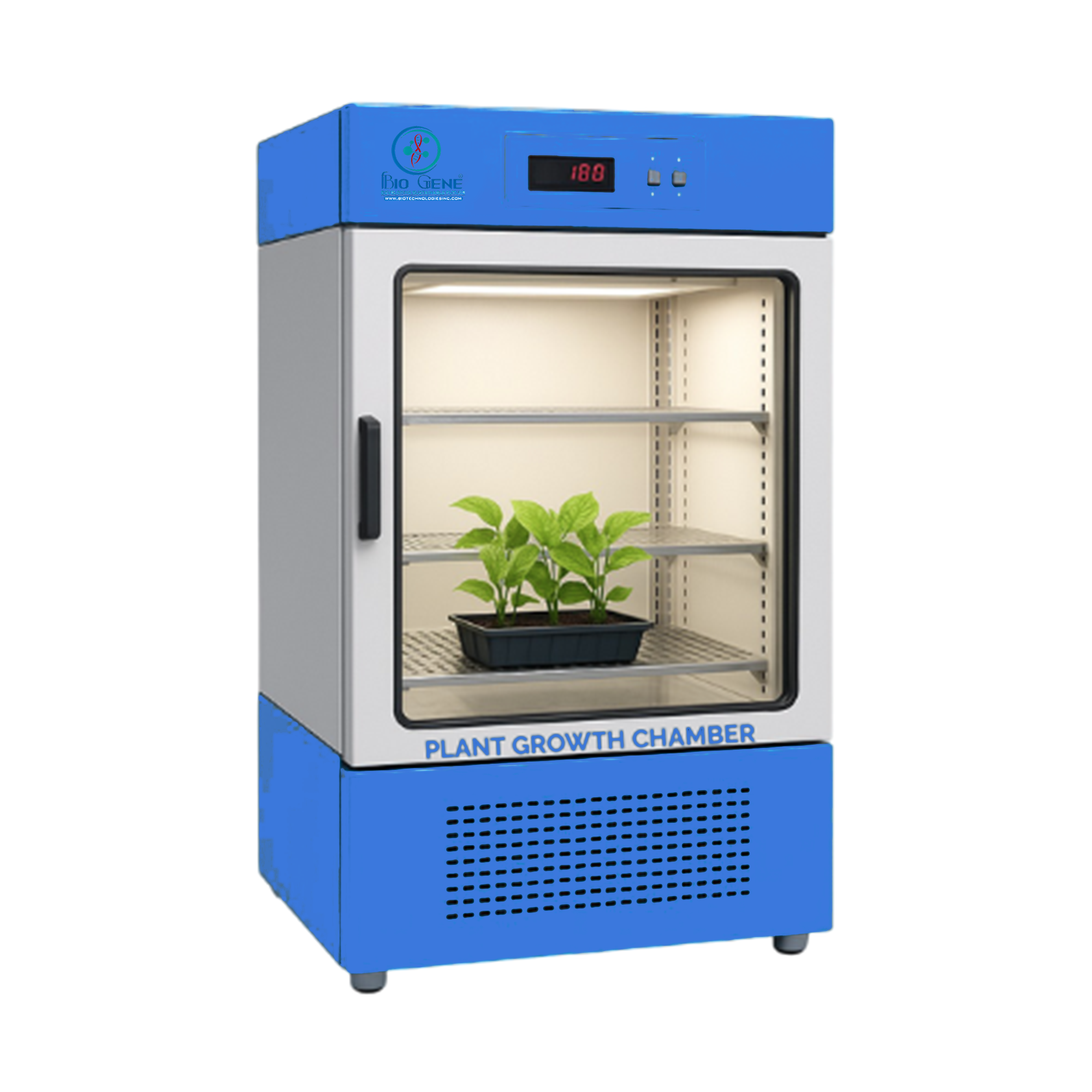
Applications
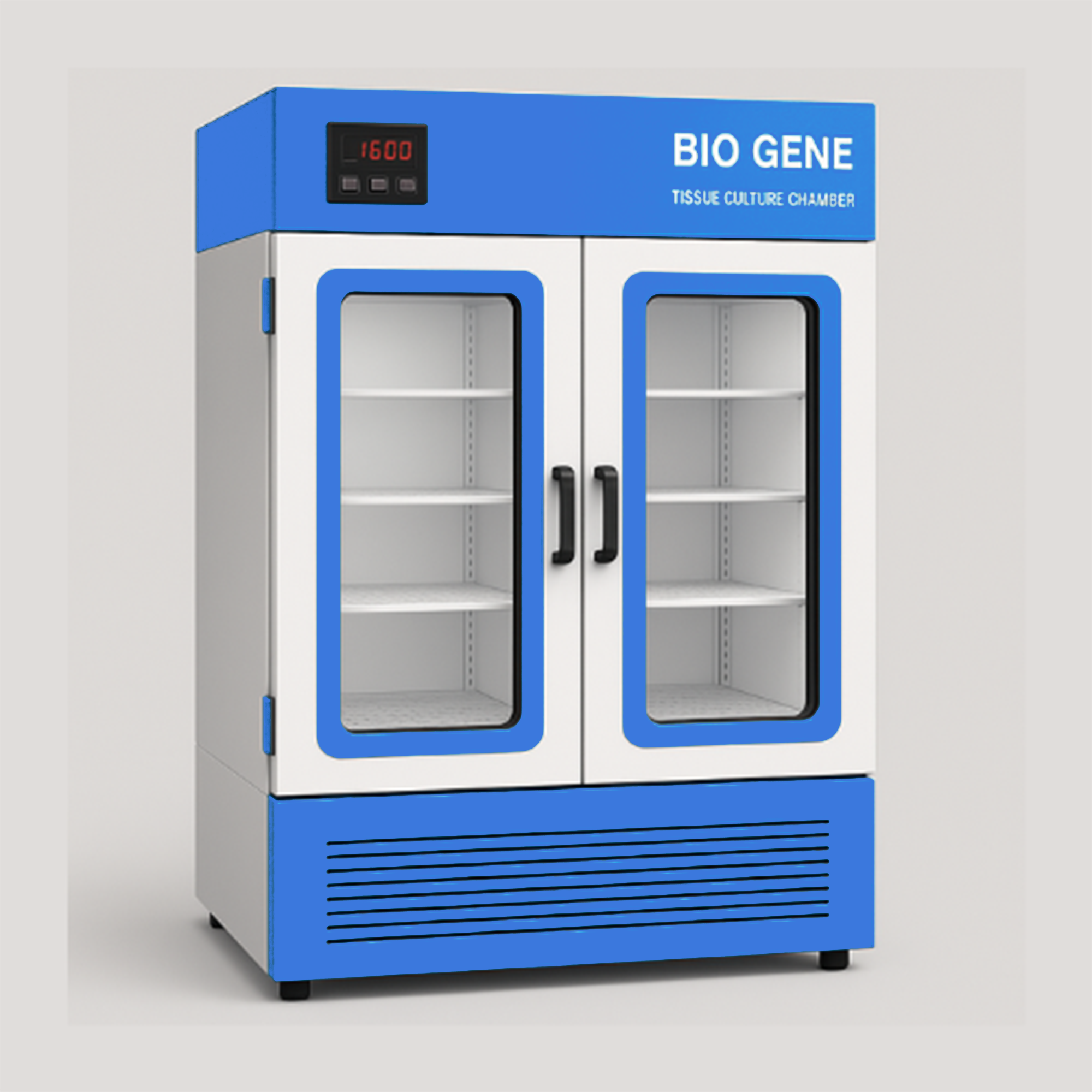
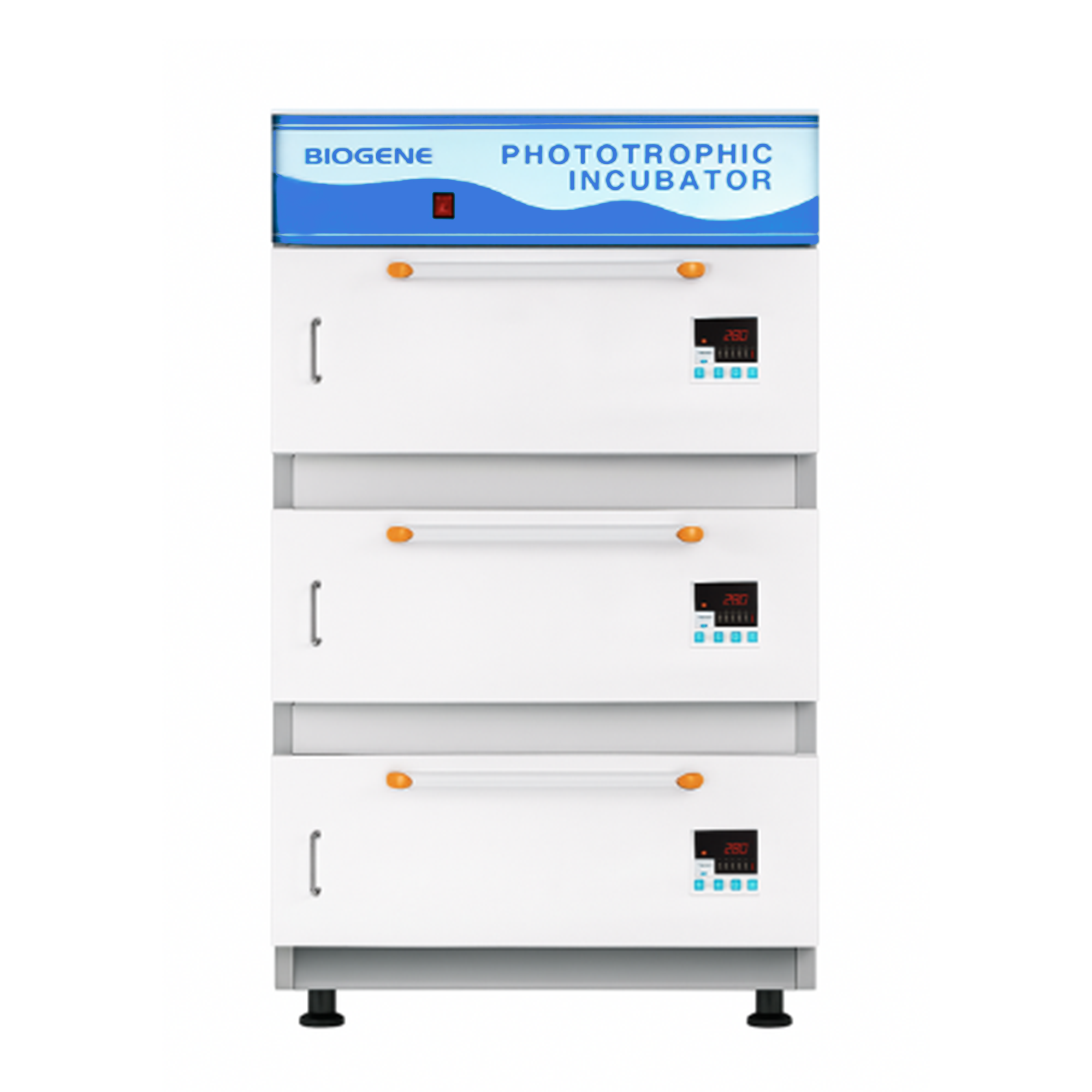
Bio Gene Phototrophic Growth Chamber are widely used in
- Research Centers
- Plant Engineering
- Plant Cultivation
- Genetic modification
- AgroPharma Industries
- Agro Industries
- Plant fertility EW& Hybridization
- Universities
Feature
- PLC based HMI interactive control panel.
- Touch screen control display with graphics.
- Programmable controller provides automatic operation of variable temperature, humidity and illumination value.
- Self-Diagnostic Function automatically checks any malfunction and make warning signal.
- Illumination 0 to 35000 lux
- Safety over temperature and current protection
- CFC Free
- Precise Hot Air & Humidity
- Puff Insulation keep the surface Temperature comfortable & Avoid Heat & Humidity Loss.
- Silent Hot Air Blower, Unique design of Air Circulation & Humidity circulation & improved Temperature / Humidity distribution.
- Unique design of Ventilation.
- Microprocessor based Environmental chamber controller with Auto tune PID Temperature Control.
- Soft Power on switch
- Real time Clock
- Safety and Convenience over temperature and current protection capability
- Temperature Alarm
- Self Diagnostic Function
Control
The temperature controlled PLC based HMI interactive control panel.
Lighting Control: 0-25000 LUX (35000 LUX optional)
LUX intensity of (0/25/50/75/100)%
Colored: Blue, Red, Far Red or White LED with wavelengths from 455-750mm
Illumination Cyclic: Photoperiodic cycle of the chamber from 0 to 24 hours.
Humidity Range: 5% to 90% RH ± 3RH
Cooling
Temperature range: 5-60°C
- Standards : ISO,EN, CE, Electro magnetic
- MDD :- 93/42/EEC
- IEC 60068-2-14
- EN 61000-6-1 : 2001
- EN 61000-6-3 : 2001
- Electromagnetic Compatibility Directive (89)/336/EEC)
- EN: 60101, ISO, CE
Construction
- Polish 304 grade of Stainless Steel interior Corrosion resistant long life.
- Kanthal A-1 steel Tubular heater J shape.
- Full feature with Temp. Controller.
- Thermostat Bi-Metalic Capillary type for both dry & wet.
- Angle Iron frame with castor wheel for easy movement
- Fitted with 02 Nos. Fan for cooling & heating). Technical Design and Construction Silent fan motor to maintain uniform temperature and humidity.
- Illumination with fluorescent tubes/LED accounts for artificial day light.
- Front Panel: Front panel of our units comprises of on/off switches heating, cooling and mains indicator lamps, temperature controllers.
- Cooling: An energy efficient cooling unit is installed in our temperature and humidity control cabinets to enable bio chemical demand, cyclic and growth studies at lower room temperatures.
- High end CFC free compressors of Kirloskar/Tecumseh make, conforming to latest international standards and guideline.
Specification
|
MODEL
|
BTI-PGC-350
|
|
Temperature Range Light On
|
10°C to 45°C.
|
|
Temperature Range Light OFF
|
4°C to 40°C.
|
|
Temperature Accuracy
|
± 0.5°C
|
|
Temperature Control
|
+0.5 deg.
|
|
Temperature uniformity
|
+0.2 deg.
|
|
Temperature stability
|
± 0.5°C
|
|
Temperature deviates
|
±1.0°C to ±0.5°C
|
|
Temperature fluctuation
|
± 0.2°C Heater PID control
|
|
White Light
|
LED Tubes
|
|
Red, Blue and Green Lights
|
LED Tubes
|
|
White light intensity
|
0-12000 lux
|
|
Temperature sensor
|
3 wire RTD
|
|
Humidity range
|
40% RH to 90% RH
|
|
Humidity stability
|
± 5% RH
|
|
Humidity Control
|
± 2% RH
|
|
Humidity Sensor
|
Capacitive
|
|
Interior construction
|
Stainless steel 304 grade
|
|
Exterior Construction
|
Mild Steel duly powder coated
|
|
Self construction
|
Powder Coated steel wire
|
|
Alarm
|
Audio and visual
|
|
RH Accuracy
|
+ 2°%
|
|
Capacity
|
350 Liters
|
|
Electrical Supply
|
220 to 240 volts 50/60 Hz AC
|
A Phototrophic Growth Chamber is a controlled environment designed to support the growth of light-dependent organisms such as algae, cyanobacteria, plant tissue cultures, and other photosynthetic microorganisms. It regulates light intensity, spectrum, temperature, humidity, and sometimes CO2 levels to create optimal conditions for photosynthesis and consistent, reproducible growth results, which is especially valuable for research, agriculture, and biotechnology applications.
The chamber uses programmable LED lighting systems that allow users to adjust light intensity and spectral wavelength according to the specific needs of the organism being cultivated. Many models offer customizable light cycles, meaning you can simulate day and night periods, or even mimic specific seasonal light patterns, to encourage healthy and efficient photosynthetic activity.
Most Phototrophic Growth Chambers support a wide operating range, typically between 4°C and 60°C for temperature, with humidity control from around 20% to 95% relative humidity, depending on the model. This flexibility allows the chamber to accommodate a variety of organisms, from cold-tolerant algae species to tropical plant cultures, while maintaining stability within a narrow tolerance for precise experimentation.
Yes, many modern chambers come equipped with digital control panels and connectivity features that allow remote monitoring through a computer or mobile application. This lets users track real-time conditions, receive alerts for deviations, and adjust light, temperature, or humidity settings without needing to be physically present at the chamber, which is especially useful for long-term studies.
Regular maintenance involves wiping down interior surfaces with a mild disinfectant, periodically checking and replacing air filters, and inspecting seals to ensure proper environmental control. It's recommended to establish a routine cleaning schedule based on usage frequency, and to avoid harsh chemicals that could damage sensitive components like LED panels or humidity sensors, since contamination can significantly affect growth outcomes and experimental accuracy.

 Related Products